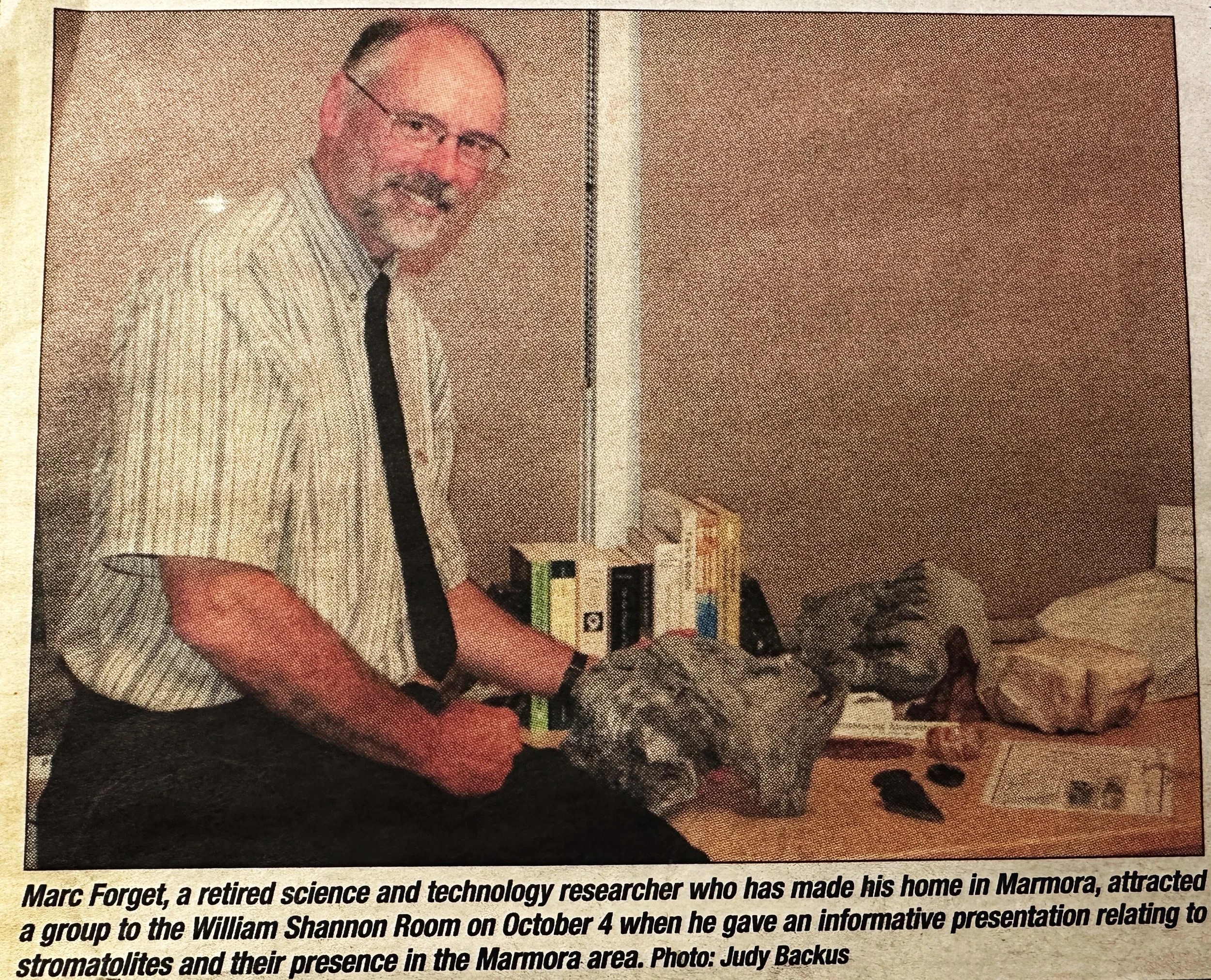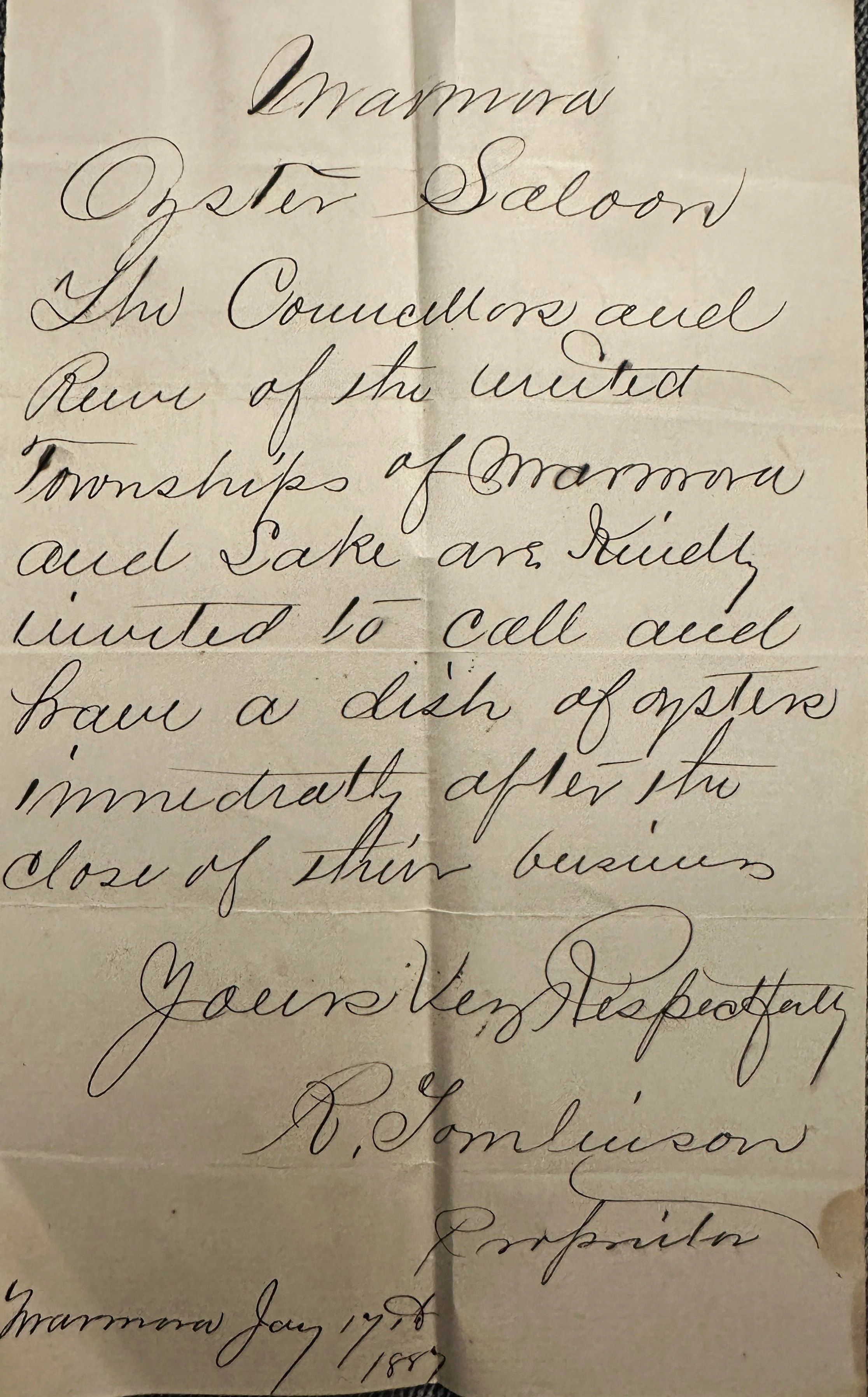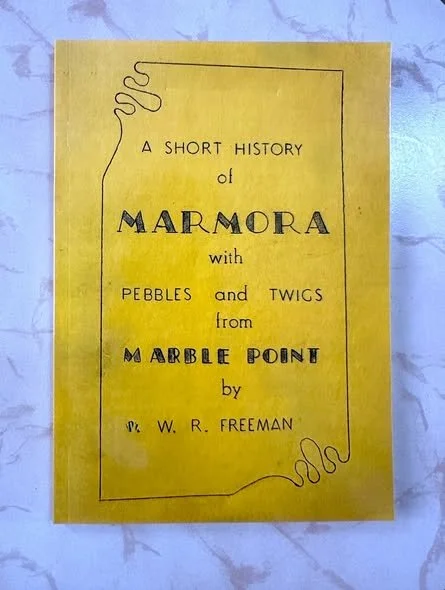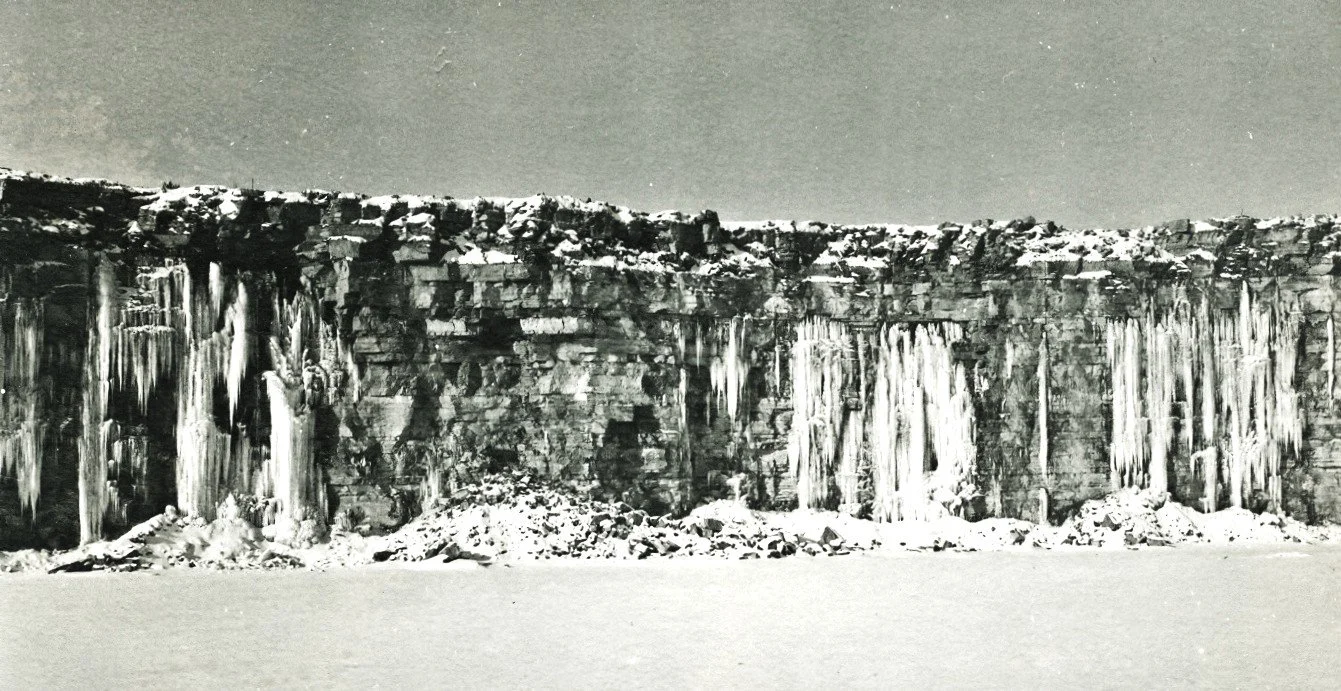
DID YOU KNOW?

(If you reach the bottom of the page,  hit "Next".  There's more!)


Malaria? Here? Really?

It is hard to believe that malaria was a problem in Ontario,  but during the early  1800's the disease was rampant.  At the time,  it was not known that malaria (often called ague or fever) was transmitted by mosquitoes.    In fact the common explanation was  "bad air",  hence the name  "Mal-Aria"  due to the many swamps in the area.

 It was not until August of 1897,  that Ronald Ross,  a British officer in the Indian Medical Service, demonstrated that malaria parasites could be transmitted from infected patients to mosquitoes.    Many had suggested that  the  original carriers were soldiers of the Engineer Corp that built the Rideau Canal,   while others have put the blame on the influx of Loyalist coming from the south.  We know now,  of course,  that it was one particular temperate  strain of parasite that could survive the Canadian winter in the bladder of its victim,  and the following spring,  hand over the potion to the next mosquito population.,  making it possible to spread through-out the Province.

In the  first Public health Report of 1882,  much coverage was given to the major outbreak in Madoc,  blaming dams for swamping lands,  dying vegetation,  and the bacteria of sewerage leaking into the surrounding soils. Recommendations to remove dams were not  welcomed by those profiting from the lumber industry requiring higher water levels.  

 Mr. E.D. O'Flynn,  secretary of the Board of health wrote:

"It is said that it is the intention of the Trust and Loan Co. to rebuild the dam (referring to the Chisholm dam), which if done and allowed to remain, will be to invite the return of the Hydra-headed monster, malaria, with all its wasting and destroying influences. As the residents of this village and vicinity have been sorely tried during the past five years by a disease which like the plague that passed over ancient Egypt leaving one dead in every house; and having been severely taxed in doctor's bills, enfeebled in health and shattered in constitution, the Board are of the opinion that it has now assumed such a serious aspect and become so important a matter, that the Government should deal with it."

The malaria hot spots  in Madoc were spread around Moira Lake and included a pond in the village,  as shown by the black areas in the  1882 map included in the report. (below)

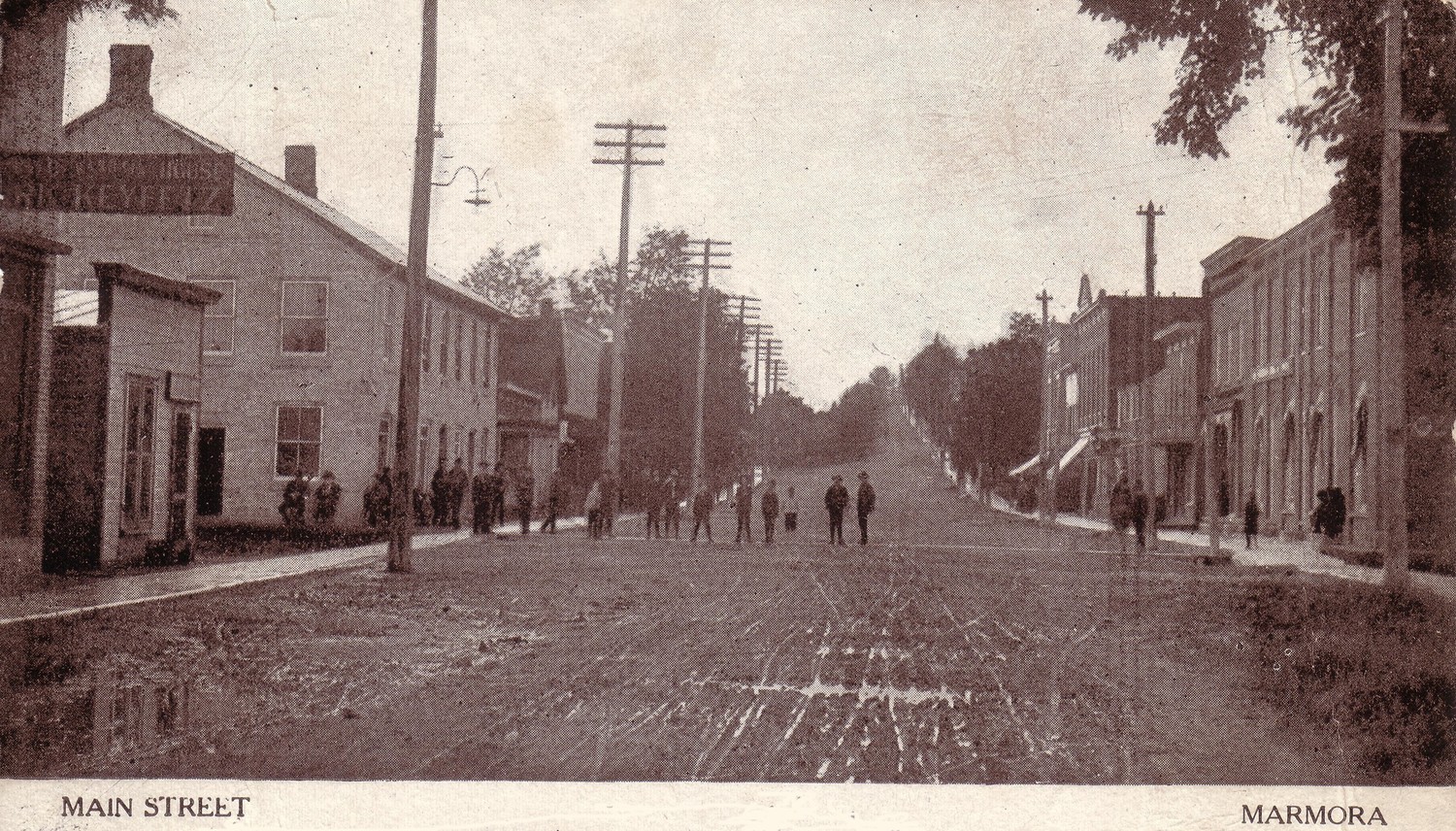
But the report also added "while at Marmora,  up the river in a north and west direction,  with high, dry riverbanks,  malaria appeared some years later than at Madoc,  and again,  at Doloro (sic)  it has this year been as bad as last."   

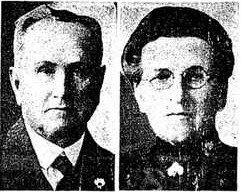
In 1854 William Minchen ( far right)  suffered fever and ague twice but survived.

Bessie Bramley Pearce (1856-1882) was known as the nicest girl in town.  She was married to the well known warden of the County of Hasting,  Josiah Williams Pearce.    She died of Malarial fever.

And in case you were wondering,  in 2013, a total of 210 confirmed cases of malaria were reported in Ontario in the integrated Public Health Information Sytem.

Ron Gilmore  added:  John Alexander Plunkett perished of malaria fever after laying ill for 10 days. He passed away on September 6, 1881 at the age of 42, leaving a wife and 6 children. His first wife, Alice, also died of a fever in 1875. John is buried in the Marmora Common Cemetery.
So where is Barriefield? And what did it mean to Marmora?

It was 1814, before the birth of Sir John A. MacDonald,    when Kingston businessman and politician,  Richard Cartwright, divided part of his own land on the Cataraqui River,   opposite Fort Henry, Kingston,  to create lots for working people principally employed as tradesmen at the Royal Naval Dockyard.  In charge of this naval installation  was Commodore Robert Barrie,  after whom the Village was named.  

In response to the war in 1812,  and with the building of Fort Henry in the 1830's,   activity in the area was increasing,  and Barriefield became a significant pre-confederation Upper Canada Village and a true outpost of the British Empire, complete with nine pubs!  It is such an important piece of local history,  that it was designated as  a Heritage Village,  the first of such designations in Ontario.

With the outbreak of the First World War in 1914,  Barriefield  was established as a military base, known as Barriefield Military Camp,  or Camp Barriefield.  Young soldiers were brought in from all around the area to train,  as noted in the Marmora Herald article (left)  dated June 1, 1916. 

On June 15, 1916,  it was reported in the Marmora Herald that there were  "over 107 cars and vehicles running to camp,  carrying the camp license,  and these cars take in fares every day which amounts to about $2,000.00.  This means about $60,000.00 a month for car fares to and from the camp, spent by officers and men,  and all this goes into the City of Kingston.  Why,  the car drivers alone could pave the camp road,  and should have been compelled to pay something towards all things necessary to make the camp safe and comfortable."

The Herald further reported that "The Pearce Company Ltd. (Marmora)  have shipped a couple of car loads of lumber to Barriefield to be used in putting doors in the tents of the 155th Battalion.  As a result of the wet weather,  the tents are hardly habitable at present."  June 8, 1916

Training Camp - A Charles Bleecker photo

 c.1914  Charles A..Bleecker 2nd from left

1914  Blacksmith shop at Barriefield, 

In 1937,  the training camp (home of the Royal Military College)  expanded to the south of the King's highway,  and in 1966 was renamed the Canadian Forces Base Kingston. (CFB Kingston)

As for Barriefield,  it remains a quaint village  a  with a distinctive building style typically consisting of low profile one-and-a-half storey homes of wood frame or stone construction. Buildings are primarily single detached residences with a few semi-detached or row-type houses. Although many buildings and properties have been altered over time, and new buildings have been added to the Village, the overall nineteenth century rural character of the Village of Barriefield has been retained

ON YOUR MARK!

Lumber has always been a lucrative business in Canada,  but  by the 1870's,  competition was so fierce that  rivers became crowded with  logs of competing companies.  Identification of logs became a major issue,  and the Dominion of Canada felt it necessary to intervene.

In her article,  "Logging Log Ownership",   Amanda HIl of the Deseronto archives writes:

 "In the days when logs were floated down rivers to be processed, it was important for the lumber companies to reliably identify whose logs were whose. The Timber Marking Act was passed in 1870 and required logging firms in Ontario, Quebec and New Brunswick to register a unique identifying mark and then to stamp the cut trees with that symbol. Between 1870 and 1990, some 2,200 timber marks were registered. Failure to register and use a timber mark incurred a fine of $50, while wrongly applying a mark to someone else’s logs was also an offence, with a fine of up to $100."
 
In 1874,  the Ministry of Agriculture published "The Lumberman's Timber Guide, "  to help lumber companies overcome problems of identification.  It included pictures of stamps for all registered lumber companies,  and a complete index.  The preface concluded that  "without a correct book of reference,  much trouble and loss must be sustained from ignorance of the Registered Marks by which the timber and lumber can be identified,  besides incurring the risk f infringing on those already adopted and registered."

.This  hammer’s mark (a six-pointed star) was registered by Deseronto’s H. B. Rathbun & Son on July 18, 1870. 


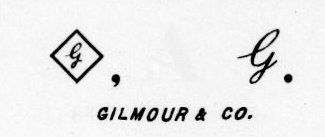
Lucky for us,   Ron Barrons from "back of Cordova",  donated the  stamp hammer of the  Gilmour Lumber Company,(pictured above)  one of the  major timbering companies of this area,  along with the Rathbun Lumber Company and the Page Lumber Co.  

The Gilmour Lumber Company was widely active in our area and north up to Algonquin Park.  For an excellent site regarding the Gilmour company's Dorset Tramway,  with 128 photos and text,                    click here!

T.P. Pearce & Co.  registered March 4, 1872

THE ROY PHOTOGRAPHIC STUDIO OF PETERBOROUGH

One tragic result of the flood in downtown Peterborough in 2004 was the discovery that a large portion of the historical Roy Photographic Studio collection, valued at over $8 million,  lay beneath almost one metre of water. Three generations of the Roy family had documented almost every facet of life in the Peterborough area from 1896 to 1992, making their collective works one of the most important such collections in Peterborough's history.

"FirstOnSite"   (known then as Rosco Group Document Restorations) was called in and 30,000 glass plate and other film negatives, related photographic material, and documents were loaded onto freezer trucks for transport to secured facilities where the complex and delicate restoration work began.  Two years later the job was completed. (Full story click here)

But the Roy Studio also produced hundreds of portraits from private sittings,  one of which was Alan Grant's grandmother,  Jen Hewitt,  of Marmora,  shown here at 18 years old.

Alan Grant is a son of Jack Grant,  about whom we have written on many occasions.

          To see more of the Alan Grant collection,                                        JUST CLICK HERE


Photo below (received from Janet Harper- Long) is another example of a Roy Studio portrait.  This is Mrs.  McKechnie,  wife of Dr. MacKechnie of Marmora.


WHO WAS JOHN FISHER?

AND WHAT WAS HIS BUSINESS WITH FLOYD "BUD" LOVELESS"


John Fisher was a reporter and broadcaster in Halifax before joining the CBC as a "roving reporter." From 1943 to 1955, he travelled throughout the country, broadcasting its wonders on "John Fisher Reports," a popular, live, quarter-hour program heard 3 times a week over the national radio network. He called his scripts "pride builders" and was unofficially dubbed 'Mr Canada.'   He once said,  “my talks weren’t meant to be objective. . . they were meant to be favourable. They were ‘pride builders” He travelled the country,  drawing on his own personal experiences,  selling Canada to Canadians.

On one of these trips, in early July of 1951,  Mr. Fisher visited Floyd (Bud) and Rita Loveless in their newly renovated grocery store in the south end of the Dempsey Building on Forsyth St.


The Loveless' had already impressed the post war shoppers with their new modern concept of "self service",  but 1951 saw unheard-of renovations in all areas of the store - a plate glass window across the whole store front,  fluted aluminum trim and black vitrolite tiles around the window.  The new awning had a built-in furler,  and an open refrigerator served the dairy area inside.  And so much more to be proud of,  as John Fisher would have reported.

Bud and Rita Loveless carried on that business until 1979 when they sold to Al and Shirley Montgomery.

You can read more about Rita & Flight Officer Floyd Loveless,  and the history of the store.

  JUST CLICK HERE


SO WHAT'S A GURNEY?

Between 1872 and 1887,  two brothers from Hamilton,  Edward and Charles Gurney,  built an iron foundry on the location known today as 500-522 King Street West, Toronto.  In his wonderful website on Toronto history,  Doug Taylor describes the price of progress "as the natural playground was to be buried beneath an enormous industrial complex"  (Click here to link to Doug Taylor's website on Toronto history)

1927(Toronto Archives)

            500-522 King St West today

"Viewing these restored buildings today, it is difficult to imagine them being a part of a bustling, sooty, industrial complex, with hundreds of workers labouring in hot, fetid conditions to tend the furnaces, shovelling coal to keep the fires alive. It was an era when workers possessed few rights. Wages were poor and hours were long, usually nine or ten hours a day, six days a week. Lung disease and work-related illnesses were common."

BUT WHAT DOES THIS HAVE TO DO WITH MARMORA?


In March of 1937,  Mr. S.A. Lowe,  owner of the Royal Hotel in Marmora,  decided to make improvements to the hotel,  one of which was a new heating system.  Putting in a call the the Gurney Foundry Company resulted in the delivery of a three and a half ton furnace within 48 hours,  and complete installation within another 24 hours!  For Mr. Lowe it resulted in half the fuel costs.

If anyone has the opportunity to visit the basement of the Royal Hotel,  we'd be interested to know if it is still there!

TO READ MORE ABOUT THE CHANGES AT THE ROYAL HOTEL OVER THE YEARS,  CLICK HERE.


1856 RESURFACES

A visit this week by Jim Chard at the Marmora Historical Foundation resulted in his donation of a Marmora artifact that some would describe as "just a lump of rock".  But close inspection reveals that it represents a moment in time when the life of the Iron Works came to a halt,  never to fire again.  On one side of the specimen are the remnants of the slag from the last firing -  coarse and black,  with still a little iron present,  as our spherical magnet indicates in the photo below (right).  On the other side are some fire bricks,  the only remains we have of the furnace itself. Lucky for us,  Jim knew what he had found.

It was 1821 when Charles Hayes built the massive structures that billowed smoke over the whole village day and night,  siphoning off the metal from the ore.  It was 1824,  when he gave up trying to make the failing project work,  and went back to Ireland.  Several attempts to profit were made thereafter,  and finally in 1856 the operation took its final breath and the great water wheels came to a halt.

Just click here to read more of this story of struggle and defeat.

Click on photo to enlarge

click on photo to enlarge

Who was Charles Edward Goad?

Listed in the Dictionary of Canadian Biography,  Charles Goad was a significant personality in late-19th-century Canada as  a civil engineer and publisher  of, amongst other things,   fire insurance plans.  He produced a staggering number of coloured diagrams of cities and towns  around the world,  including Marmora in 1893!

Charles-Edward-Goad-1879-Photo-Credit-Vancouver-Archives


Fire-insurance plans, which would become Goad’s principal field of endeavour, were diagrammatic maps of urban areas produced for the use of fire-insurance companies. The measured drawings of streets and structures helped insurers determine risk for policies and assess the extent of liability in the event of fire. The plans recorded street names, widths, and numbers; fire-protection facilities; the materials, shape, height, placement, and use of buildings; and the locations of openings, types of stored materials, and areas of high-risk activities on industrial sites. They were originally made as required by insurance companies, but the expense of surveying, other fieldwork, lithography, and stencilling with watercolours, combined with relatively limited demand and the need for frequent revisions because of rapidly changing urban morphology, meant that few copies were produced. (Dictionary of Canadian Biography - Click here for the link)

The above map indicates the placing of stores,  including the hardware and post office on the site of the present BMR gift shop,  and a hotel next door,  one of four hotels drawn on the maps.

Here's to the River Gangs!

A story by Margaret Monk,  written in 1967

During the river driving days,  three companies drove their logs with the same gang of  men all on the one drive, with the logs being sorted out just below the  iron bridge on Beaver Creek, (recently replaced) about a mile north of the village. This was done according to markings: (Rathburn marked with a "star"; Gilmore with a "G". and Pearce, a "P").

The lumbering industry at that time covered only pine, hemlock, spruce and cedar, as  hardwood lumbering did not come into being until later. Hardwood could not be included in the river drive because it would sink, and therefore, portable saw mills were used.

Lumbering was a full year's employment with men going to the bush in October to cut logs, skid them, draw to river or lake. Then as soon as the waters opened, the same men would drive logs to the mills then go into the. mill to help saw them.

The last cook of the Pearce river drive that can be recalled was Bill Rose, father of the late Mrs. Myrtle Jones and Mrs. George Kerr.  Walking boss was Jacques Wilkes, father of Mrs. Garth Sabine.

Other mills were operated by William Bonter and Sons, owned originally by the family of the late Louis Briggs and continuing to operate until 1925; and Lynch and Ryan who began operations in 1907 and carried on for 20 years in the northern part of the township and the Coy Mill in Shannick.

Click here for more about the lumbering industry in Marmora

The Thomas P. Pearce Co.

1911 Dam building by Cordova Co & Pearce Co..

The Coy Mill in   Shannick:  Left to Right - Bob Warren,  Bruce Johnston,  Jack Coy,  Buck Warren, Leo Provost Sr.,  Bob Provost,  Stan Brooks?,  Gary Warren,  Tony,  Vic Provost,  Bob Nobes,  Tom Johnston,  Vic Brooks,  Harold Nobes,  Peter Lucas

Remains of Bonter Saw Mill

Remains of Bonter Saw Mill

Outdoor hockey? Can you imagine!

Story by Gerald Belanger

Around 1895 and for the following fifty years, Marmora had a reputation as one of the most enthusiastic members of the Trent Valley Hockey League (TVHL) in Central Ontario. Before covered arenas made their appearance in the area, crowds would stand around the ice surface, no matter the weather, and nothing seemed to dampen their enthusiasm. The only way to attend games away from home was horse drawn vehicle , cutters or sleighs. Sometimes nearly as many local hockey supporters travelled to Stirling, Madoc or Campbellford as those that would attend the game from the host village.

Marmora Herald Nov. 1, 1906 “Mr. Frank Pearce returned home Monday from visiting in Toronto a week. While in Toronto, he purchased an automatic piano, for the purpose of furnishing music at Marmora new rink this winter.”

 Marmora was one of the last villages left in the TVL circuit that did not have a covered arena.   As the opposing TVL teams objected to playing on open rinks,  Marmora  adopted Stirling,   and later  Madoc as their home ice  for games against other teams.  One of the very first outdoor rinks was located on Mr. Donnelly's property. 

 The Marmora Herald,  dated December 30, 1933,  wrote that a new outdoor rink was to be built south of Highway 7 on Matthew Street along the east side of the Crowe River.  On this three acres of flat land,  there would be enough space later to build a softball diamond and a tennis court.  On December 20, 1934,  the Herald wrote:  "This year a few stop logs were removed from the dam and the rink was flooded to a depth of about four inches"

In the summer  of 1941,  Clifford Jones gave permission to the rink committee to build a new outdoor rink on a spare lot located directly behind his restaurant and barber shop on Forsyth Street.  It was felt that the new business section location would alleviate some of the damp and cold that skaters experienced on the rink located so close to the Crowe River.

 Some very early records might be missing but we do know that from approximately 1914-1924,  Thomas Moffatt cared for the outdoor rink only to be replaced by John Finnegan from 1925-1938.   Hugh Young took over from 1939-1942.  John Finnegan returned in 1943.  Hugh Young's salary in 1942,  as rink manager,  was 37.50.  The financial statement for 1942 also showed a net profit of $2.15 after expenses.

Due to the heavy snow fall and lack of frost in the ground,  the committee decided not to flood and clear the outdoor ice surface in 1945.  With the cancellation of ice for skaters and outdoor hockey for the 1945/46 season,  committee members became aware of the local people's determination to have an indoor arena in their own home town.

THEN CAME THE YEAR 2025

The Marmora arena was closed once again, but Marmora skaters were not disheartened. With the help of community groups and local involvement, another outdoor rink was erected. With Jennifer Bennett spear heading the project, funds were received from the Marmora Lions, the MARS committee,   the Marmora Boosters, the Marmora Legion and the volunteers lined up.       Rec Manager,     Jeff Young marked and gated the spot at the fair grounds; screening  was delivered and levelled by Devon Althouse, (Althouse Property Maintenance); and initial water fill with Merv Taylor leading this task. With the fire department and their team, this took only a couple of hours and sped the process up significantly., involving a team of volunteers to hold down the rink liner and tarps.  And THANK YOU!... goes out to Harris Septic Pumping and Haulage for donation of the Portable Toilet!

Ice rink builders (left to right) wes cuddy, ron fudge, bill fudge, dave sharp, matt cuddy, peter fudge & ike holloway

The rink was finally ready with a Grand Opening set for January 11, 2025.

merv taylor, the ice man


What did Marmora and Cameron Bay, N.W.T., 1000 miles north of Edmonton, have in common?


Well,  believe it or not,  there are two connections!

According to traveler Ryan Silke,  Cameron Bay was inhabited by prospectors, trappers, and several businesses during the busy mining rush of the mid 1930s. It was an ideal harbour for float planes, the primary mode of transport for prospectors.  First settlement of the site began in the spring of 1932 with prospectors tents, a trading post operated by Murphy Services Limited, and a government authorized postal office by the end of 1932. Within two years there was an RCMP detachment, Hudson’s Bay Company post, Government office, several restaurants, trading posts, doctor’s office, post office, aerial bases, government radio station, saw mill, private residences, and other businesses.

A 1933 survey of town indicates the Byrnes' house

It was Dr. Thomas O. Byrnes who went to Cameron Bay from 1933-1935,   retained as a Medical Health Officer for the district and in addition was paid a small amount for looking after the police.  He was to help out in the treatment of native people and any destitute. 

But it was his wife that made history - On January 15, 1935,  Marion Shannon Byrnes,  daughter of Dan Shannon of Marmora,  and sister of Jim Laughlin Shannon (Shannon's Drug Store) gave birth to a 7 lb baby girl,  the first non-native childborn in Cameron Bay - so far away from home!

By 1938,  Cameron Bay,  or Radium City, as it once called itself, or Port Radium, as it is officially named, was a ghost “town,” a relic of the radium rush. It was left with 16 people -  the wireless man, the HBC man, the police, & the bootlegger, -old man [Martin] Gardner.

However,  1942 saw the reopening of Eldorado uranium mine in the N.W.T. which brings us back to Marmora.  The Eldorado mine held the richest uranium deposit in North America,  eyed by the U.S. Government for the development of the atomic bomb.  The only processing plant big enough to handle the demand was Eldorado's Port Hope refinery,  with re-processing handled by - you guessed it - Deloro!

FYI:  Copies of letters from Dr. Byrnes written while in Cameron Bay are stored at the Marmora Historical Foundation.

Click here to read all about the Eldorado Mine & Deloro

Port Radium by A.Y. Jackson

Check your old photographs. They may have been made in Marmora.

In 1826/27, using a camera obscura fitted with a pewter plate, Niépce produced the world'sfirst successful photograph from nature, a view of the courtyard of his country estate, Gras, from an upper window of the house. The exposure time was about eight hours, during which the sun moved from east to west so that it appears to shine on both sides of the building.  For the next 60 years,  photography was a matter of experimentation,  looking for the sharpest long lasting image.  By 1837 Daguerre was able to fix the image permanently by using a solution of table salt to dissolve unexposed silver iodide. That year he produced a photograph of his studio on a silvered copper plate, a photograph that was remarkable for its fidelity and detail. 

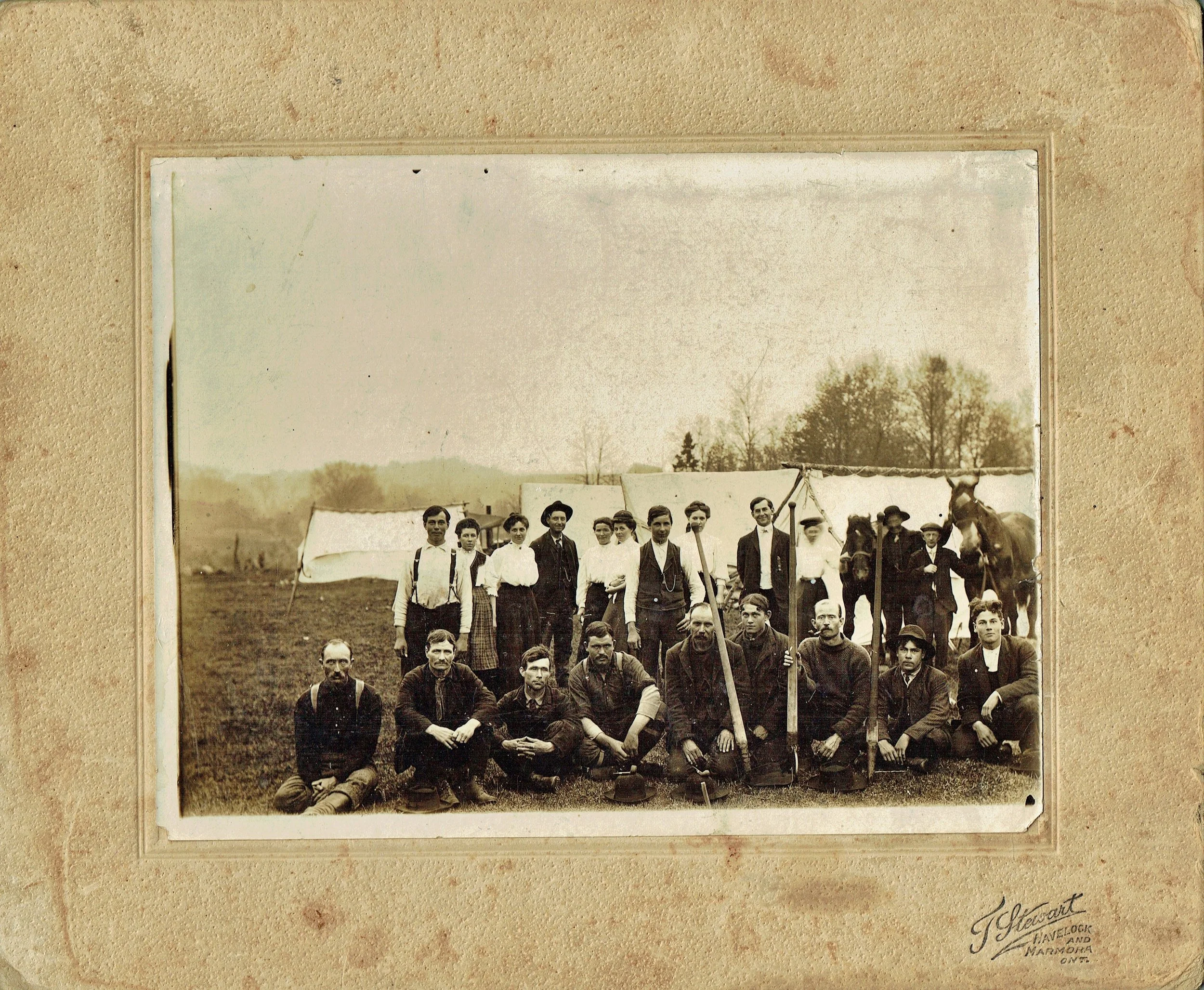
Next was the ever popular tintype,  which,  by-the-way, contains no tin  but is a blackened iron sheet.  However it lost in popularity to the higher quality and lower costs of albumen prints on paper.  It employed a glass negative allowing the consumer to buy several copies of the same image..   But it was not until the mid 1880's that photographic paper and camera equipment vastly improved and the public was offered the very popular "cabinet card" - the photo on paper (about 4 x 6) and mounted on black, maroon or green board, with borders, trim and scalloped edges..

Marmora has had two commercial photographers that we know of.  Some time in the 1880's,  Mr. Galaugher (whose name we think was Alex),  was selling photographs,  marked with his stamp on the back.  He was the photographer that took the well known photo of the first train coming from the north into the Marmora Station in 1884. His stamp reveals that his studio was located "Opposite the post office",  which at that time was at 3 McGill Street.  That puts his studio just north of Madoc St. on the east side.

Accompanying that photo was a collection of photos of the iron mine in Coe Hill,  which had recently opened in 1884.  These photo were mounted in the same manner as the train photo and were most likely Galaugher photos.   Click here to see the collection

The second photographer was Thomas Stewart,  whose studio was located where the library is now.  An excerpt from a 1914 Belleville Intelligencer described it as follows:

Farm in Vansickle, photographed by Thomas Stewart

"A well known and popular studio in Marmora which embraces all the modern improvements is the one conducted by Mr. T. Stewart.  The studio located on Forsyth St. is nicely arranged and possesses all the modern conveniences. He is an experienced and practical artist who gives his personal attention to every department of the business and allows no work to leave his establishment that does not come up to the highest standard of excellence. Notwithstanding the high quality of these pictures the prices are moderate and promptness In the fulfillment of all orders Is a distinguishing feature of the business. All kinds of portrait enlarging and large groups given careful attention. Finishing for amateurs promptly attended to.  Mr. Stewart established himself in business in Marmora fourteen years ago."

Family history of Thomas Stewart:

Thomas Stewart born 28 December 1873,at Trenton, died 1955. He married Florence Eliza Booth (1870 - approx.1911) on the 24th of March, 1897. They had two children, Roy Graeme, born 1 June, 1903 and Flossie (Florence) Elizabeth, born 1905 at Marmora, died in 1993.

Thomas was married a second time on Sept. 5, 1916, to Margaret Jane Caskey (1882 –1935) The 1921 census shows a 10 month old daughter, Jane Margaret. At some point they moved to Belmont Township and tried farming.

Thomas and Margaret are buried at Havelock at Pine Grove Cemetery

Wayne VanVolkenburg adds: The 1931 census of Canada locates our photographer Thomas Stewart, age 57, living in Belmont Township with his wife Margaret, age 49, and children Jean 10, and Grace 7. His occupation at that time is listed as farmer.


THOMAS STEWART PHOTOS

WHAT DO CROWE LAKE AND CZECHOSLOVAKIA HAVE IN COMMON?

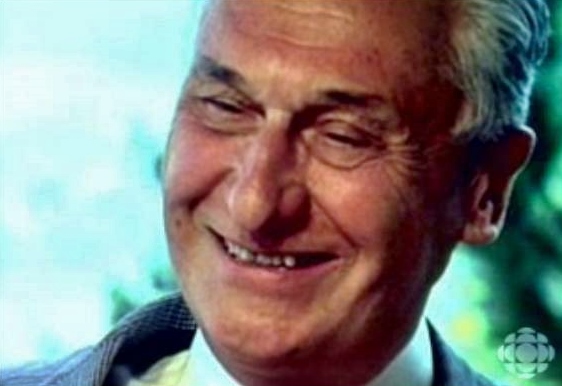
Click the photo to watch the 1980CBC interview of Thomas Bata by Patrick Watson

Click the photo to watch the 1980 CBC interview of Thomas Bata by Patrick Watson

It's a fascinating pre WW2 story of a shoe maker who saw the writing on the wall as Hitler's influence was taking over Europe.  He decided to move his entire factory and 120 employees to Canada to start what would become the world's largest shoe empire.  In a brave move, Thomas J. Bata built the village of Batawa (named after Bata and Ottawa) just south of Frankford,  which would supply every need of his company families.

Largest cottage built in 1935

Unbeknownst to many,  Thomas Bata and his wife, Sonja,  along with their executives and families,  vacationed on "Birch Island" in Crowe Lake,  Marmora,  where their managing director,  Mr. Herz, had bought three cottages all in the same style with rooms off a central grand room, containing the stone fireplace.  The most southerly cottage housed the "boat boys"  and probably a gardener.

 According to Wilma Bush in Marmora,  many of the employees also enjoyed the lake.

Tony Daicar's cottage was on Marble point road

"Growing up on a farm on Marble Point Rd., Marmora Twp., we had the marvelous opportunity of meeting many Czechs from Batawa.  The Daicars had a cottage just up the road from us & Mrs. Daicar had many visits with our Mother (we loved her accent). Each summer picnics were held onthe lawn of Tipperary House, across road from us, by Czechs in Batawa. Lots of music & laughter - we were always welcome to join them - a lot of happy memories of these people!"

John Fielding wrote a tribute the company and its families,   and in particular to Tony Daicar, who arrived in Batawa from Czechoslovakia as a 7 yr. old,  but spent leisure time on Crowe Lake throughout his life.

CLICK HERE TO READ THIS INSPIRING STORY OF CANADIAN INDUSTRIAL HISTORY,  THE BATA SHOE EMPIRE AND THE COMPANY FAMILIES. (Kingston Whig May 3, 2016)

Comments:

Evidently a "master craftsman" from Cleveland was the supervisor for the building of the cottages and they made the furniture at the same time,  according to a present owner.   Mr. Herzhad barges on the lake which made it possible to supply the cottages.    The most southerly cottage had previously been owned by the 'Moons',  and appropriately called their cottage "Lunar Bay".

Ronald Barrons wrote to say:  I've never read anything about Thomas Bata that I didn't find wonderful and fascinating. And so it was just now in reading all this 'new' stuff offered here, fascinating as always. Photo from my mother-in-laws collection who worked there in the 1940's.

Annmarie Willman-Spry Dad (Pat Willman) always bought/sold shoes & shoemaking materials from Bata for his shoe shops due to the fact that he was a HastyP & wanted to support the Batas for their efforts during the war.

Margaret Daicar am the widow of Tony Daicar. He was six years old when his family came to Canada with the Batas. I knew Tom Bata quite well. He had a a brilliant mind and was one of the most interesting people I have ever met.

Edward Zapletal Thank you for the wonderful post. It was nice to see the photo of Tony Daicar. He and my father (Walter Zapletal) were classmates in Frankfort in the 1940s. Tony was my father's best man at his wedding to Marie Zabransky in 1952. My mother still talks about visiting the cottages as a child, and we have many photos that were taken around that time. It was a brilliant move on the part of Mr. Bata to relocate the company to an area that provided his employees so much access to the beautiful Canadian countryside.

Annette Taylor

I had the pleasure of meeting Dr. Tony Daicar (the 2nd) at Kingston Hospital in 1981 and when he learned that I live in Stirling, he mentioned that their family were part of the Czechoslovakian community in Batawa. What followed of course, was a discussion of Marmora and Crowe Lake. Dr. Daicar always mentioned Crowe Lake when I met with him for my appointments. Dr, Daicar's wife made beautiful jewellery as a hobby and I met them again at Portsmouth Olympic Harbour's famous gift show and sale, a few years later.


Susanna Moodie visited Marmora


This is a watercolour by Susanna Moodie painted between 1832 and 1840, and entitled by her as "The First Mine in Ontario at Marmora, Hastings County," It is either the Blairton Ore mountain or the bank of the Crowe River where limestone was quarried for the blast furnaces. She did a second painting with the same title,  both of which are stored in the National Archives in Ottawa.  It is from this second painting that the Marmora Historical Foundation bases its logo of the three miners.

the Moodie house at 114 bridge street in Belleville


Susanna Moodie, nee Strickland, author, settler (born at Bungay, England,  6 Dec 1803; died at Toronto 8 Apr 1885) was the youngest in a literary family of whom Catharine Parr Traill and Samuel Strickland are best known in Canada. Her struggles as a settler, progressive ideas, attachment to the "best" of contemporary British values, suspicion of "yankee" influence in Canada, and her increasingly highly regarded book, Roughing it in the Bush, have made her a legendary figure in Canada.

2003 commemmorative stamp with sisters Catherine Parr Traill and Susanna Moodie

2003 commemmorative stamp with sisters Catherine Parr Traill and Susanna Moodie

Ku Klux Klan in Havelock Too close for comfort

Kingston Ku Klux Klan rally in 1927

Ku Klux Klan in Havelock      Too close for comfort

It is hard sometimes not to judge those of the past by our own standards. No doubt, we would outrage them as surely as they sometimes do us. One result of different view points was the acceptance in Hastings County of the Ku Klux Klan. From its branch base in Belleville, membership in the fraternity crept north in the 1920's and 30's. The sight of hooded men at cross burnings was not unknown to the area.

In her excellent Kingston History Blog,  Francesca Brzezicki writes,   "While the original Ku Klux Klan of the 1860s was contained to the American South and concerned with bringing down the growing presence of blacks in public and political life, the Klan of the 1910s and 20s had branched out in geography and intolerance. New targets of hatred included not just non-whites, but Catholics, Jews, immigrants, and in Canada, French-Canadians."

THE HAVELOCK STANDARD confirmed in the establishment in Havelock,  March 4, 1926

The Canadian Encyclopedia defines the Ku Klux Klan as an "outlawed, racist, ultra-conservative, fraternal organization dedicated to the supremacy of an Anglo-Saxon, Protestant society."   It adds"Like their American counterparts, Canadian Klansmen had a fanatical hatred for all things Roman Catholic and feared that the purity of the Anglo-Saxon race was being jeopardized by new immigration. Moreover, they were not averse to committing crimes to achieve their goals."

Where are they now?

1918 Influenza Pandemic kills 20-40 million

"The influenza pandemic of 1918-1919 killed more people than the Great War, known today as World War I (WWI), at somewhere between 20 and 40 million people. It has been cited as the most devastating epidemic in recorded world history. More people died of influenza in a single year than in four-years of the Black Death Bubonic Plague from 1347 to 1351. Known as "Spanish Flu" or "La Grippe" the influenza of 1918-1919 was a global disaster. "    (https://virus.stanford.edu/uda/)
And Marmora was not spared from this tragedy.  On October 31,  1918, the Marmora Herald reported,   " Three more deaths occurred this week from influenza - Agnes Helen O'Neil passed away last Thursday;  Carrie E. Linn passed away last evening and Mrs. Mary Morrison passed away on Sunday morning.  Her husband died on Tuesday of last week." In the hopes of keeping people home,  the Board of Health requested "all services be withdrawn for one more Sunday in the hope that the influenza epidemic may be completely wiped out."  On Nov. 7, 1918, it was reported that the Oriental Hotel at Peterborough had been converted into an emergency hospital to care for patients suffering from influenza.

Click here for more on the 1918 Influenza Pandemic

Oriental Hotel was considered Peterborough's grandest hotel establishment from the mid 1870s until about 1912. It took up a good portion of the south side of Hunter St. just west of George St., rose four storeys.  It was thought to be the best hotel between Toronto and Ottawa, and was operated by the Graham family. As you can see from the postcard view of the interior, the dark wood furnishings were accented by potted palm trees and classical style pillars and decorated ceilings.

From about 1918 into the early 1920s, the Oriental served as the city's first Isolation Hospital, treating patients with flu and pneumonia. Later, it housed a barbershop and the Oriental Cafe, followed by the Trent University bookstore in the 1960s and 1970s. In an architectural loss that was most unfortunate, most of the western half of the structure was demolished to make way for a Bell Telephone company parking lot; yet a small portion of the eastern half survived, and to this day houses the Lillico law firm.


The Murder of James Gallagher

The Statute Labour Act has its origins in the earliest days of British settlement in Ontario.

In colonial times, many local roads received no government funding and male residents were forced to work on roads and bridges for as much as 12 days a year. Eventually, the number of work days required came to be tied to the assessed value of a settler's property.

Landowners had the option to pay the municipality to hire someone to work on the roads in their place. Refusal to perform statute labour or pay for its value was punishable by up to six days in prison.

It was a July afternoon in 1917,  on the 8th Concession of Marmora Township when Samuel Rogers,  Edward Storey and road master, James Gallagher were  engaged performing their statute labour.  While drawing gravel and spreading it on the road,   Rogers and Gallagher had quarreled several times, when Rogers suddenly struck Gallagher on the head with his shovel.   Gallagher fell to the ground and all attempts to revive him failed.

Upon the arrival of Dr. Bissonette,  the coroner,  a jury was sworn in and  an inquest opened.  But for unknown reasons,  little evidence was taken,  a permit was issued for the burial of the deceased and,  Rogers and Storey were summoned to appear as witnesses at an adjourned inquest. 

After a complaint by the deceased's  brother, Daniel Gallagher,  Mr. B,C, Hubbell,  J.P. issued a warrant for Rogers' arrest.  Following two nights in jail at the town hall,  Rogers stood before Magistrates B.C. Hubbell and Wm. Bonter fora preliminary trial.

Dr. Thomson,  who had been at the scene, described how Gallagher probably died from a neck fracture caused by the fall.  Hugh Farrell reported the prisoner had confessed to the crime but that it was self defense.   Edward Storey, the third labourer on the road,   was described by a newspaper as "not very bright intellectually and hard to get his evidence."

As a result of the Preliminary trial,  the body,  which had be buried on Monday,  was exhumed on Wednesday and a post-mortem examination held by Drs. Thomson and Crawford.  The verdict of the jury was that the accused did not intend to kill the victim,  and so recommended that he be tried for man-slaughter,  instead of murder.

Marmora Herald in March,  1918 - A Year Later

"Samuel Rogers Acquitted.     The assizes opened at Belleville , on Monday, the 4th day of March, 1918 before the Hon. Justice Rose. The case of the King vs Rogers for murder came up for trial on Tuesday  and after hearing a lot of evidence and argument, it was given to the jury who were instructed by the Judge to consider whether  or not the prisoner committed theoffense in self defense. If so, of course, there would not be any offense. The Jury brought in a verdict of Not Guilty"

Click here to read the actual newspaper article


The Deloro -Renfrew Connection

    Marmora Herald,  May 7, 1914

Citizens of Renfrew erected a four storey opera house and hotel.  The building cost $70,000.00 and was formally opened last week.  

Mr. Moon is the manager and Mr. Michael J. O'Brien of Deloro is the financier.

Mr. Moon was formerly manager of the Royal Hotel,  Marmora,  for a short time!

(It would appear that the Marmora Herald was a few years late,  as the Opera House was built in 1908-9 with a Grand Opening on March 17, 1909.)


Michael J. O'Brien, Deloro Tycoon and owner of the Deloro Smelting and Reduction Company.

Photos from "Heritage Renfrew"

The Disappearance of Rockdale

Rockdale cemetery and school For all about the school, CLICK HERE

Some will remember the cemetery and church at Rockdale,  in Belmont Township,  because their ancestors are buried there,  but few know that its history included a post office,  a saw mill, a school built in 1869  and the reputable "Belmont House".  

The 1906 Lovell's Canada Gazetteer notes that "its port is on Belmont Lake, a favorite summer resort and in the vicinity are Deer, Round and Crow Lakes. It has 2 churches (Methodist and Presbyterian), one  saw mill and one cheese factory, with printing and newspaper office facilities at Havelock. "

While  William E. Young  ran the post office from 1888 to 1901,  the office itself lasted until 1912.  During that time,  around 1904,  Mr.  E.J. Cashamore built Belmont House,   which was considered a hot spot on Belmont lake with tennis courts, bowling green and quoits beds.

BELMONT HOUSE - THE REST OF THE STORY          

The lodge was constructed by Edwin James Cashmore on property that he purchased from Mrs. Ada Young. The mortgage for the lodge was held by Robert Crawford Baillie, the grandfather of Jamie Medcof, the current owner.  Elizabeth Cashmore, wife of Edwin, came up with the "lodge idea" to isolate her husband from his drinking buddies in Toronto.

            There are 21.25 acres and 1980 feet of shoreline included at the Belmont Lake location.  A lime kiln was constructed and plaster was made from materials found on the property.  Sand was obtained from the beach, local limestone crushed, and horse hair added to make the plaster.

             During the time of its operation, there were 17 outbuildings on the property including: a dance hall with a 40x40 foot hardwood floor and band platform, gun shop, woodworking shop, boathouse and a pigpen.  Cashmore was apparently a gunsmith by trade.  There were two military muskets, 1812 and 1815 vintage.  The original lodge had 10 bedrooms on the second floor and a 40x40 foot kitchen.  There was also a back kitchen 25x25 feet that housed the well.  On the back of this was a woodshed.  The lodge reportedly operated for about 10 years.  The grounds had a tennis court, bowling green, quoits beds, trap shooting facility and walking trails. Fresh vegetables were provided bya garden on the grounds.

            Liveries in Havelock would deliver guests to the lodge from the C.P.R. train station.  The Cordova stage also passed quite close to the gate leading to the grounds.

            Unknown to Robert Baillie, Cashmore was an alcoholic. Cashmore's wife moved out in 1908 and his drinking buddies moved in.  Cashmore abandoned the place circa 1911. When Robert finally made the trip to check on the place in 1913, he discovered that many of the furnishings had been removed.  A local resident came forward and offered to disclose the location of the missing items for a sum of $50.  Robert refused to pay and threatened to have the informant charged as an accomplice if he didn't disclose the thief's name.  He did so and the items were recovered.

            Robert put the property up for sale and his wife purchased it through a lawyer without her husband's knowledge.  She had decided that the family should retain ownership and she apparently had the financial means to do so. When Jamie's grandmother died his grandfather decided to keep the property in the family. 

            Robert Baillie was reported to have hired a detective to find Cashmore.  According to Jamie Medcof he was supposedly traced to Pittsburgh.  Cashmore, his wife Elizabeth and daughter Hilda are found in Vancouver on the 1911 Census.  Death records can be found in the Vancouver area for most of his family.    

            From 1913 to 1916, Robert and his wife, Jane Trevorrow Baillie, would come to the lodge by train during the summer months.  Several times during the summer, Robert would row a boat to Ashbee's mill at the end of the lake and walk to town for supplies.  He would also arrange for the postman to bring them small quantities of goods.  In 1917 Robert purchased a Model T Ford which was used for future trips.  The road at that time passed by closer to the lodge and the bridge over the Crowe River was upstream from the present location.    

            Jamie was told by his ancestors that during the first three or four years that his grandfather was at the lodge (1913-1917) native people knocked on their door and asked permission to cross their property to visit native gravesites.  No one presently knows the location of there burial sites.          

            In the 1940's there were still several buildings in place.  In 1950 Jamie's family removed the back part of the main lodge.  There were two bedrooms left on the ground floor, off the kitchen.     

From dumpsite at Belmont House.JPG

            The remaining part of the lodge was used as a cottage until 1978.  Because it was repeatedly vandalized, Jamie removed the remaining contents (70% of the original amount) and put them in storage.  Unfortunately some valuable antiques had been destroyed.  Some of the material from the old dance hall were used in the construction of the present boathouse.  In the summer of 2014 the remainder of the old lodge was demolished.  The only remaining evidence is the old hand pump.  Apparently the old kiln site can still be located.


A summary of information obtained from Jamie Medcof on June 27, and November 15, 2014. Other information found in the Canadian Census records and death records for British Columbia.

WALTER AND AGNES VAN STEENBURGH - LOT 17, CONCESSION 3, BELMONT TWP.

Presentation1.jpg
Presentation1 (2).jpg

Across the road from the Rockdale Cemetery lies the abandoned farm of Walter and Agnes Van Steenburgh acquired about 1926. They later built cottages on the Belmont Lake waterfront part of their property. Other parts of the farm waterfront were sold or given to their relatives. Most of the descendants of these families still own the properties. Some of the unused cottages still stand, waiting to be demolished. (Walter’s surname was Steenburgh he made a trip to Holland and learned of his origins.

As an aside, it is interesting to know that this property was part of the original parcel of land granted to Charles Hayes, the owner of the 1820 Blast Furnace in Marmora. Click here for more on Charles Hayes.

Lot 17, Conc. 3, Twp of Belmont first passes from the Crown to Charles Hayes, (1824) to Anthony Manahan and Peter McGill, then to Thomas Hetherington, all major players in Upper Canada's business world.

The Van Steenburgh house

Van steenburgh barn foundations

van steenburgh cottages

Register your gun....or else.


                                          Marmora Herald October 3, 1940

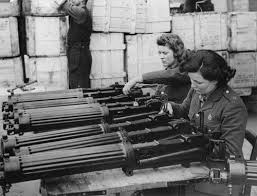
The final period for the registration of guns is now over and if an emergency arose Marmora could arm a couple of companies with guns of some kind or other. The registration showed 131 owners of guns and a total of 227 guns in their possesion. About half the guns are high powered rifles. Any person now found in possession of a gun, which has not been registered, is liable to a very heavy penalty.