
MEMORIES OF THE OLD MILK SHED
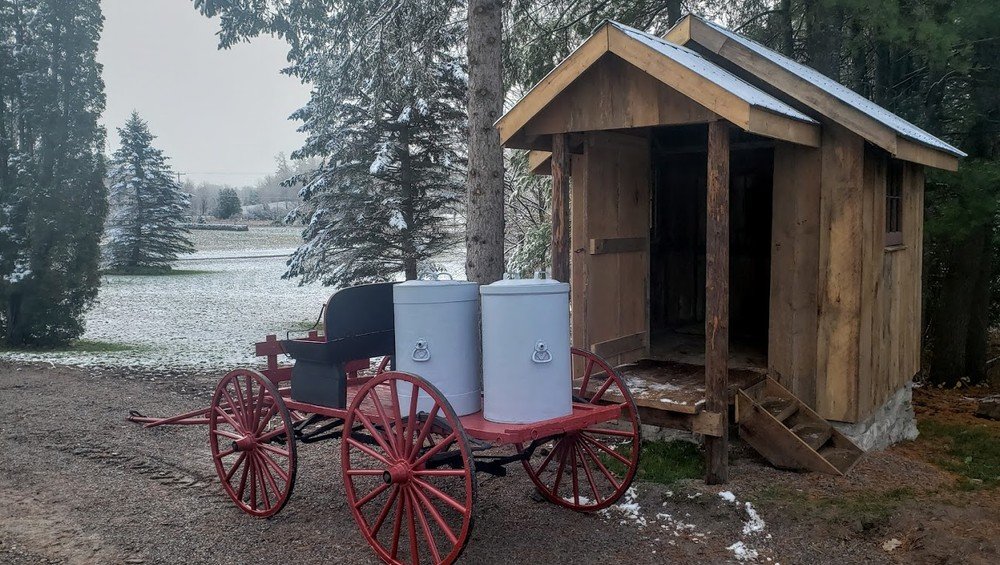
/The O’Hara family played an important role in the cheese industry and like many of their neighbours, shipped milk to the Spring Hill Cheese Factory located at the north-east corner of Mill Rd. and O'Hara Rd. This recently-constructed milk stand pays tribute to the O'Hara's role in local cheddar cheese production. Photo courtesy of O’hara mill homestead www.oharamill.ca
HELP US BUILD OUR MILK SHED ALBUM. SEND US YOUR PHOTO OF A MILK SHED NEAR YOU. info@marmorahistory.ca
Here’s a story from Barbara Duff, recollecting earlier days of milk cans and collection from milk sheds.
She writes:
“On August 31, 1969, my Mom and Dad, Cathy and Len Callfas, bought a farm on the 13th Concession in Bonarlaw. Now, 289 Huff Road. We were forever finding coins with Hannah Dairy imprinted on them when we were planting the garden, or digging holes in the ground. Most of the coins were found around a small building, close to the driveway.
It turned out that our farm was the cream drop off location for local dairy farmers for Hannah Dairy. Inside the small shed, was a cement trough built into the floor. There were two metal pipes embedded in the cement, opposite ends of the trough. Water was pumped into the trough through one pipe and exited the trough through the other. The cans of cream were placed into the trough and cold water was circulated around the cans to keep the cream cold until the cream was picked up. “
In 1933, the Department of Agriculture circulated a pamphlet outlining cooling methods. To be kept satisfactorily, it stipulated that market milk must be cooled to around 45°F. and held at that temperature. It outlined the various ways to cool milk before refrigeration, with water cooling being the simplest, submerging milk containers in cool water basins. Water, being a better heat conductor than air, effectively keeps the temperature of milk lower than it would be in open air.
Sketch by department of Agriculture 1933
“On a number of farms running water from a spring or flowing well is allowed to flow through the milk cooling tank before discharging into a watering trough. In certain cases, water as pumped from the well is passed through the cooling tank in this manner. The water should be piped to enter the tank at the bottom at one end, with discharge or overflow pipe arranged to take the water from the surface at the other end. The tank should, of course, be housed to protect it from the direct rays of the sun. “ (Dept. of Agriculture, 1933)
TO READ MORE ABOUT OUR DAIRIES, CLICK HERE
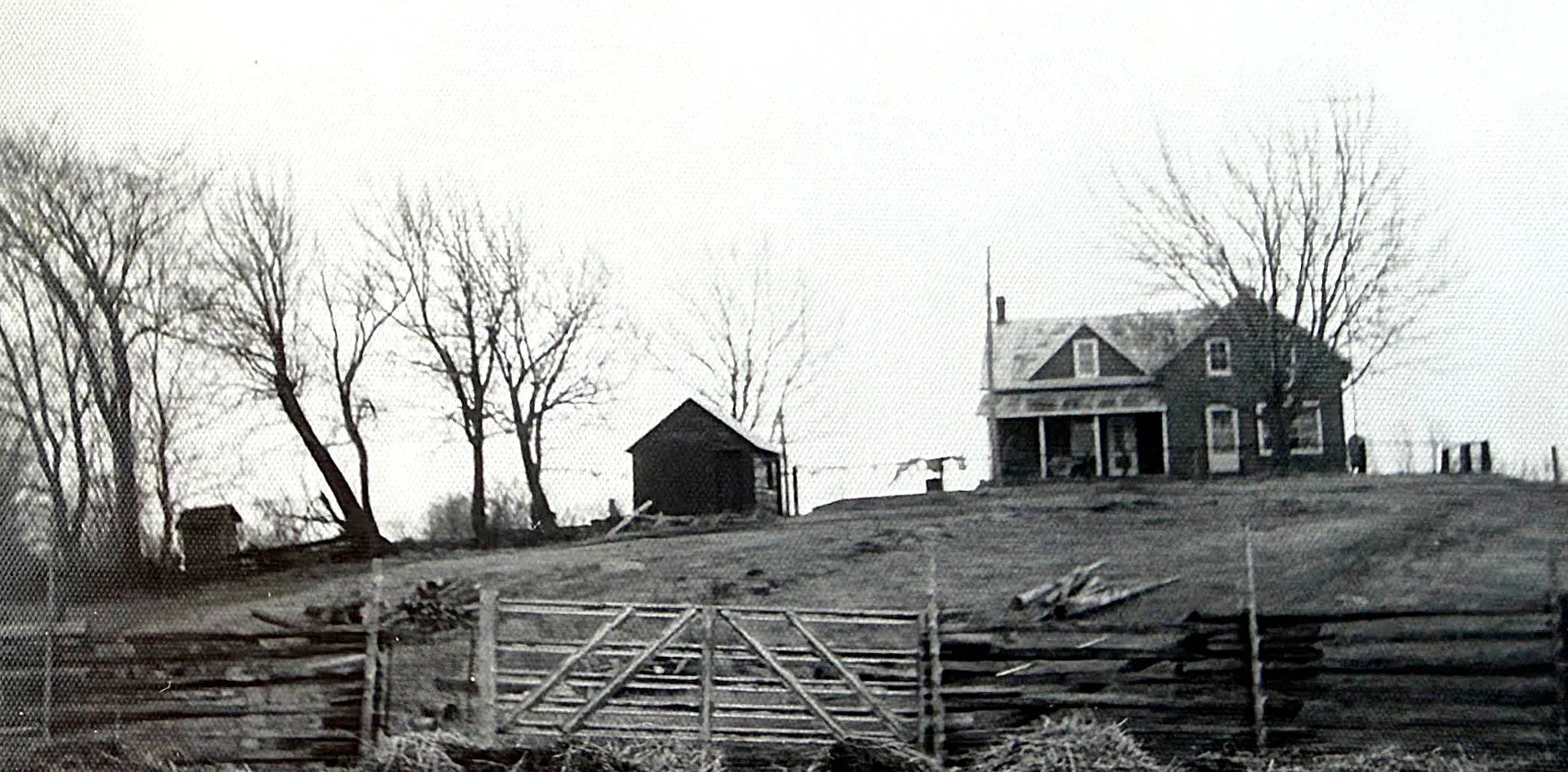
The callfas milk shed 1969
The calLfas farm with milk shed on far left . Cathy Callfas at centre
4 Bronson Rd (submitted by Dustin Caldwell)
4105 Stirling-Marmora Rd, South of Harold Submitted by Dustin Caldwell
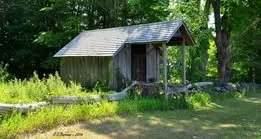
milk shed possibly on o’hara rd (Ron Barrons)