THE FISH HATCHERY ROAD - ONE OF THE PRETTIEST AROUND
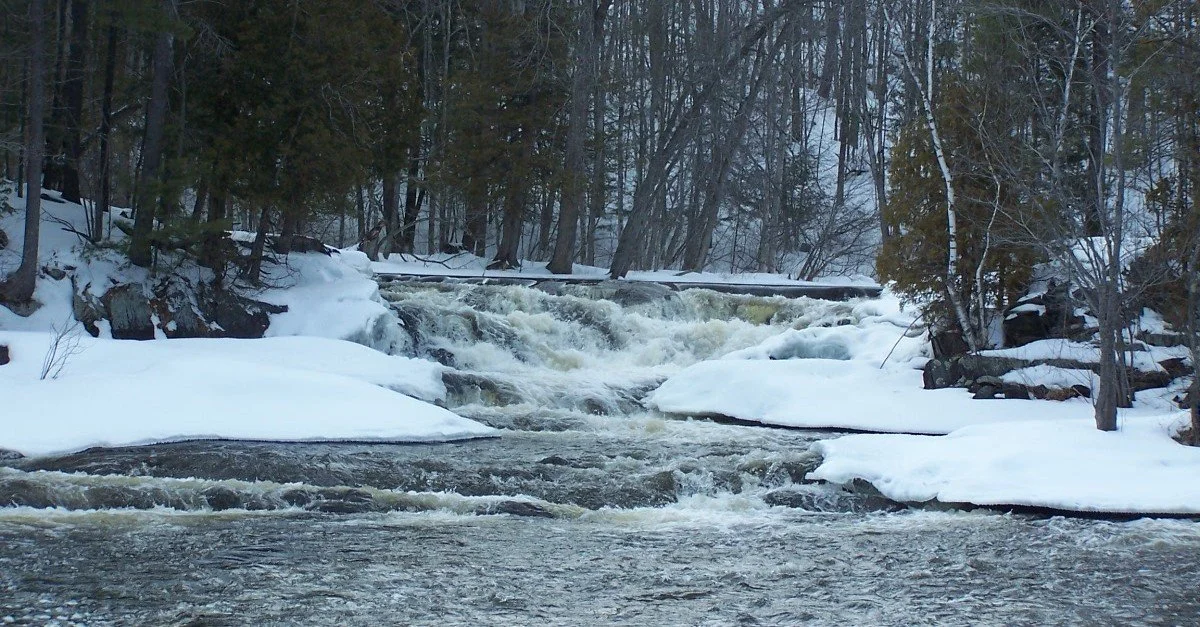
/Scott’s dam on Fish Hatchery Road
by Wayne VanVolkenburg
A LITTLE WINTER HISTORY
The Deer Lake Hatchery Road (FR18) was likely originally constructed circa 1902, to gain access to the area where the hydro plant for the Cordova gold mine would be located. The road terminated at Cordova Lake where the water intake for the station originated. Maintenance of the road at that time would likely have been the responsibility of Cordova Gold Mines Limited who owned those assets in 1911.
With the closing of the Cordova Gold Mine, and construction of the Deer Lake Fish Hatchery, which took place in 1938, the responsibility for maintaining the road now became a provincial government problem. How the road was maintained in those early periods remains a mystery.
When I arrived at the hatchery in 1968, the road had, for a number of years, been maintained by equipment that had earlier belonged to the Deshane family, who had used the grader and snow plow on municipal roads. The equipment was still serviceable, but had seen better days. By that time, the grader blade mechanism was sagging, and required a chain and come-along to keep everything together. Despite this, it provided the required service for many more years.
Whenever the municipality replaced their grader blade, the hatchery became the recipient of their old one. Then the grader would be hauled to someplace, usually Martin Manufacturing in Havelock, to have the gifted blade installed. The hatchery truck had an appropriate hitch that enabled it to pull the grader.
1966 GMC almost identical to the 1964 hatchery truck with removable side racks taken off in winter.
Usually, Ed Bowen and another seasonal worker, would look after this service. Ed told me that once when no one else was available, the hatchery manager, Jock Hunt, drove the truck. Since Jock liked to drive fast, Ed, who was riding the grader, said that he just put the blade down lightly and held on, so he wouldn’t be thrown off. Jock took off at speed, and never looked back!
In the winter, the same truck was fitted with a “V” plow and wing. The truck was taken to Tweed Steel Works where the frames for the plow and wing were attached. Because of the weight of the plow, it was necessary to weld in some channel iron pieces between the springs and the frame, to firm up the suspension. The hydraulic system to lift the plow and wing was a rudimentary setup.
gRADER SIMILAR TO hATCHERY rOAD gRADER
The hydraulic hoses were fed to three valves mounted on a piece of plywood on the truck box, just outside the driver’s door. One hose ran to a hydraulic pump, formerly used for aircraft operations, which was mounted in the truck box, with a tank of hydraulic oil. The process of raising the wing and plow was slow, taking about five minutes. Chains were attached to the truck’s rear dual wheels, and a quantity of sand was hand loaded onto the back, providing the traction required to keep the truck moving.
As soon as the seasonal staff returned to work in early April, the whole setup was stripped from the truck, to make it ready for hatchery work. Unfortunately, one spring we received a huge dump of snow, and now without a plow, we had great difficulty navigating the road. Luckily, the Township helped us out, and sent a plow to clear our road.
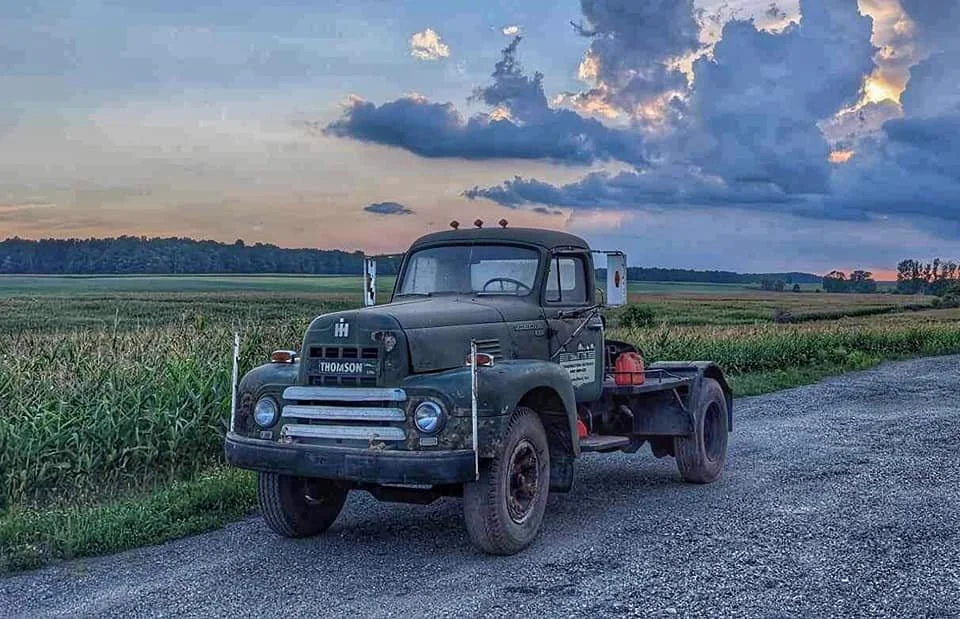
Thompson Construction truck
One of the problems for snow plowing was several bottleneck areas on the road. Around 1973, a considerable amount of money was earmarked for improvements on the road. A D8 bulldozer and an operator were contracted from J.A & D.A. Thompson Construction in Campbellford. The road was widened in several places, making those areas more passable in winter. A local contractor, Arnold Cole, won the contract to spread gravel over most of the road. On one occasion, while spreading gravel while travelling uphill, the box came off his truck. I wasn’t around to see how the box was installed back in place. At that time, the Parks branch of the Ministry of Natural Resources provided funds to upgrade and improve the parking area, and boat launch at the south end of Cordova Lake.
Over the years several attempts were made to have the Municipality take over maintenance of the road. Their reason for not doing so was because the road allowance was not wide enough to meet their standard width of 66 feet. Insurance coverage for their vehicles, working on that road, was another obstacle preventing that from happening. Finally, sometime in the 1980’s, an understanding was reached between the municipality and the Ministry of Natural resources, to have the municipality carry out some maintenance work. I don’t think that a permanent agreement was ever reached. When the power generating plant was constructed in the early 1990’s, some funds may have been directed towards improving the road at that time as well.
In the 1980’s the plow and grader were parked for several years and later loaned out to local contractors, never to be seen again. I believe the responsibility for the maintenance of the road switched back and forth between different bodies over the years. Currently, it may be privately funded. I was tasked to do the inventory for the hatchery after it closed. For the snow plow, grader, and several other items I marked as "not found" The MNR had little interest in most of that stuff, and even left some of it when the place was sold.
There has always been talk of buying enough land to make the road allowance wide enough to meet the municipal standard. Along the length of the road there have been many unfortunate occurrences over the years. A stabbing, a suicide, several drownings, thefts, and numerous vehicle accidents. Some of those are a story unto themselves….. Maybe another time.