DID YOU KNOW?

(If you reach the bottom of the page,  hit "Next".  There's more!)


Football Trophy Named after Marmora man

W.E.G. "Glad" Murphy was an employee of the Dominion Bank in Marmora, but in 1914 left for Toronto to take an aviation course, expecting to join the flying corp on the front lines.  He was picked up, however,  by the Toronto Argonaut Football Team,  who recognized him to be one of Ontario's finest athletes - a rugby player, a hockey player and even a rower in Henley.

But Glad Murphy made history when he scored the team's first-ever Grey Cup touchdown in the 1914 win over the Toronto Varsity team. Varsity's Red McKenzie fumbled the ball on a punt return on his own 15-yard line,  which Glad Murphy picked up and ran in to the end zone for an Argonaut touchdown.

One year later, though,  tragedy struck when he suffered a broken neck in a game against the Hamilton Tigers on Oct. 9, 1915.   He subsequently died from the injury."

From 1959 to 1965 the Ontario Football Conference  trophy wasthe Glad Murphy Cup.

(You can read more about the day the Argonauts rescued the Grey Cup.  Just click here.)

1920 - Leave your lights on!

1800 - 1879
1800  -  Electric battery invented by Alessandro Volta
1820  -  1st electric light demon- strated by Warren de la Rue
1821  -  Electric motor invented by Michael Faraday
1854  -  First light bulb invented by Hinrich Globel
1865  -  Patent for electric coffee percolator issued to James Nason
1875  -  Light bulb patented by Woodward & Evans
1879  -  First practical incandescent light bulb demonstrated by Thomas Edison
1880 - 1899
1880  -  First electric elevator constructed
1881  -  First commercially successful dry cell battery invented by Carl Gassner
1882  -  Electric Christmas lights introduced by Edward Johnson
1882  -  Electric iron patented by Henry Seely
1885  -  Electric mixer patented by Rufus Eastman
1886  -  Josephine Cochrane invesnts Elec. dishwasher
1886  -  Electric fan invented by Schuyler Wheeler
1889  -  Home electric sewing machine introduced by Singer
1890  -  First electric hair dryer patented by Alexandre Godefoy
1891  -  Electric stove invented by Carpenter Electric Heating
1891  -  Alternating current (AC) introduced in U. S.
1893  -  Electric toaster invented
1896  -  Electric stove first patented (not for home use)
1898  -  Battery-powered flashlight invented
1899  -  Rechargeable battery invented by Waldmar Jungner
1900 - 1909
1900  -  Electric toy trains invented by Joshua Cowen
1901  -  Alkaline battery invented by Thomas Edison
1901  -  Electric vacuum cleaner invented by Hubert Booth
1902  -  First electric air conditioner -  in Brooklyn
1903  -  First electric washing machines patented
1903  -  Lightweight electric iron introduced by Earl Richardson
1905  -  First movable vacuum cleaner invented;
1906  -  Permanent wave machine invented by Karl Nessler
1907  -  Electric amplifier invented by Lee De Forest
1908  -  Lightweight portable upright electric vacuum cleaner invented by James Spangler
1908  -  Electric coffee percolators first appear
1908  -  Spangler's electric vacuum cleaner patented by William Henry Hoover
1908  -  First electric-powered washing machine, the "Thor," introduced by Alva Fisher
1908  -  Standing mixer patented by Herbert Johnson
1909  -  First American-made electric toaster introduced
1910 - 1919

1910  -  Hotpoint introduces the first electric stove
1911  -  Single-beater electric mixer patented by Hamilton Beach
1911  -  Waffle iron introduced by General Electric
1911  -  Neon lights invented
1913  -  Electric dishwasher introduced by Walker Brothers
1913  -  Bissell introduces 33-pound Electric Suction Cleaner
1913  -  First in-home electric refrigerator introduced by General Electric
1915  -  Electric clothes dryers appear on the market
1915  -  Oven thermostat developed
1915  -  Nine-pound vacuum cleaner introduced by Franz
1916  -  Kelvinator introduces its first electric refrigerator
1916  -  First electric lawn mower introduced
1916  -  First radios with tuners allowed listeners to change stations
1918  -  First refrigerator with automatic controls introduced by Kelvinator
1919  -  Pop-up toaster with built-in timer invented by Charles Strite
1919  -  Stand mixer for the home introduced by KitchenAid
1919  -  Cone-shaped Christmas lights introduced by General Electric
(From Trail End Guilds Inc)
Women-in-the-1920s-Flat-Rock-Org.jpg

Although the science of electricity was known in the early 1800's,  it was not until the late 1800's that inventors, like Thomas Edison and others,  made it an applied science. 

"Anything that won't sell," said Edison, "I don't want to invent.  Its sale is proof of utility, and utility is success."

By 1920, eager consumers saw the creation of all kinds of electric-powered home inventions,   from flashlights and batteries to refrigerators and garbage disposal.  Naturally,  the demand for electricity grew with the hunger for appliances.  Electricity in Marmora was first supplied by the Pearce Co.,  later to be taken over by the newly mandated Hydro-Electric Power Commission in the 1920's.

On November 4, 1920,  the Marmora Herald wrote the following:

"The work of reconstructing the Marmora Electric Light System is now well under way. As soon as the substation is completed, part of the village, at least will be changed to the Hydro and the remainder of the village as soon as the various sections can be completed. Owing to the recent heavy rains and the releasing of part of the water held back in the upper part of Trent Valley water shed, the Hydro now has sufficient power for its requirements in this district.

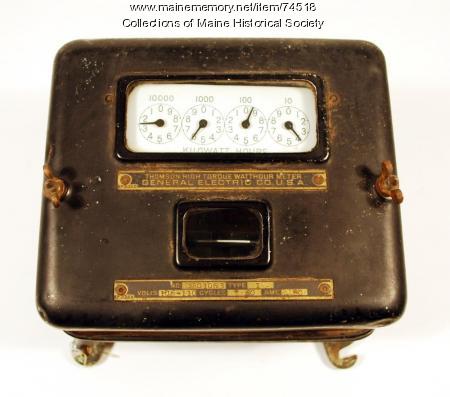
1913 meter

1913 meter

Whether Hydro is to prove a success or failure and the cost of lights in Marmora will depend largely on the citizens of the village. If the use of the new power for the lighting of houses becomes general and any considerable amount is used for domestic purposes, such as irons, heaters, toasters, washing machines etc., and also for industrial purposes, the cost of lighting in many cases will not be much higher than at present. The cost of each light, if they were left on continuously as at present, would probably be three or four times as much, but with the meters those who wish to economize will turn off the lights they do not require at any time. On the other hand there will be the immense advantage of being able to turn on any light at any hour of the day or night and the nights will be very much brighter than at present.

With the installing of meters, changes will have to be made in the wiring of most houses, but very few will have to be completely rewired and the cost in many cases will not be as great as is anticipated. If the present intention is carried out the Council will make arrangements whereby the cost of new wiring and also extensive alterations may be paid in monthly installments together with the cost of the light.

One thing should be remembered, especially by property owners:  the street lights will have to pay the actual share of the cost of installation and operation, in proportion to the amount of power used for other purposes, and if the number of lights used is not increased,  it will add considerably to the tax rate. The more power used the cheaper it will be for all.

Between 1920 and 1931 more than 200 different brands of refrigerators were available.


A little Cheesey History

The Cheese Factories of Marmora and Lake Township,  as all the cheese factories of Hastings County,  represented a large part of the economy in the late 1800s and early 1900's,  but they are a dwindling business now.  In fact none exist in Marmora and Lake Township,  whereseven used to be,  almost all of which  operated by co-operative or joint stock companies.  According to an 1893 Herald report,  only 3 existed in Marmora out of 67 in the whole of Hastings County.

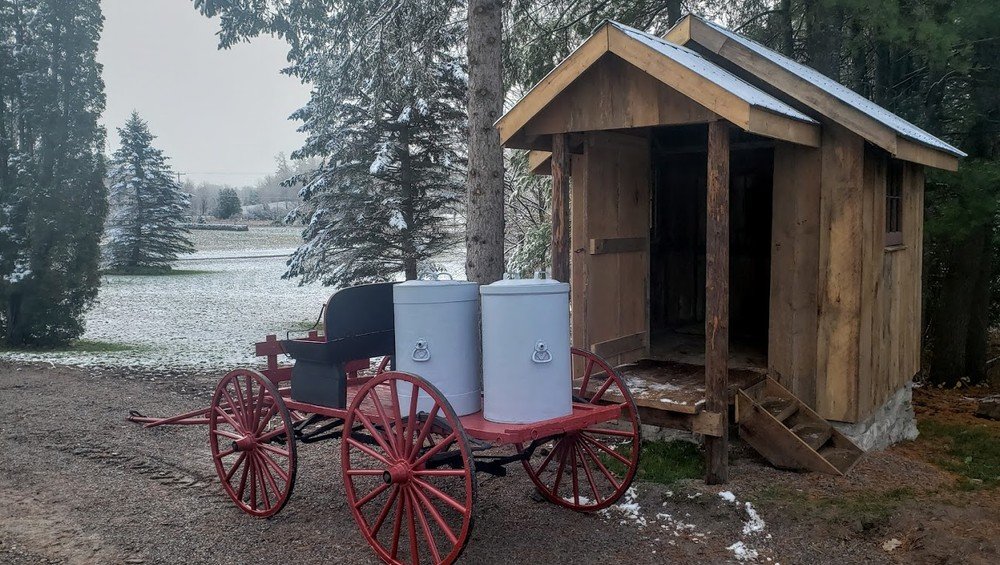
With the improvements in transportation,  fluid milk could be easily shipped greater distances. The market, however,  demanded a standardized, pure product.  This could only be met through the factory system.  Milk sold on the farm generally varied in quality and cleanliness.  This led to a shift in priority fro the production of cheese and butter to that of a fluid milk centre.

A 1911 Government Dairy reports provides the following list:

MARMORA CHEESE FACTORY -  Wm. Simm, Sec,   Marmora,   (Centre Line Rd & Beaver Creek Rd,)

(The Marmora Herald reported on April 12, 1906, that Mr. William Linn "is moving to Marmora Cheese Factory this week and will begin work about the 20th instant."  He was later Reeve of the Village,  in 1938)

Bernard Finnegan. 1930, son of John Finnegan, owner fo the Marmora Cheese factory

Mildred (later campion) and Marguerite Finnegan (later sister mary bernard), , daughters of John Finnegan. standing outside the cheese factory

On Jan 17, 1924,  the Marmora Herald reported:  There are two Marmora men who are the proud possessors of engraved invitation cards from the Lieutenant-Governor of Ontario to be present at a luncheon on Tuesday the 29th day of January.  They are Mr. John Finnegan and Mr. John Bell, jr.  cheesemaker and President of the Marmora Cheese Factory respectively.  Mr. Finnegan was recently awarded first prize for Colonial Cheese shown at the Royal Dairy Show in Glasgow, Scotland.  This is the second time he has won laurels in the old land and the luncheon is given in honour of those who have won distinction in various agricultural activities.

John Finnegan family 1930s

SILVER LEAF - Ralph Laycock,  Sec.  Deloro (Lajoie Road)

(The Marmora Herald reported on April 15, 1909 "Mr. Daniel Gillen has secured the contract for the erection of the new Deloro Cheese Factory.")  

For this factory,  profit wasn't everything.  The Marmora Herald on Oct. 21, 1915 reported  on Oct. 21, 1915, "The Silver Leaf Cheese Factory located on Lajoie Road at Deloro has given one day's make of cheese to the British Red Cross Fund. The men who haul the milk from their routes to the factory will do so free of charge and the cheesemaker also gives his service free to make the cheese. Four cheese blocks averaging about 75 pounds each were made from the milk gathered today."

On April 29, 1920,  the Herald reported that Mr. Sam S. McComb was running the factory at Deloro.

In 1927, John Finnigan Jr. attended the Kingston Dairy School and was appointed Cheesemaker at Silver Leaf.

Silver Leaf Cheese Factory - Lajoie Rd., deloro

COOKS CHEESE COMPANY -  Hugh Maloney, Sec,   Marmora (Ira J. Cook & Wm Hilton are  listed as cheesemakers in 1888 directory) The cheese factory was located at concession 2, lot 21 and Mr.  Ira John Cook,  owner,  lived on concession 1, lot 2 , Marmora Twp

pHOTO SUPPLIED BY wILLY mORRISON WHO RECEIVED IT FROM HIS AUNT, dARLENE mORRISON dUNCAN

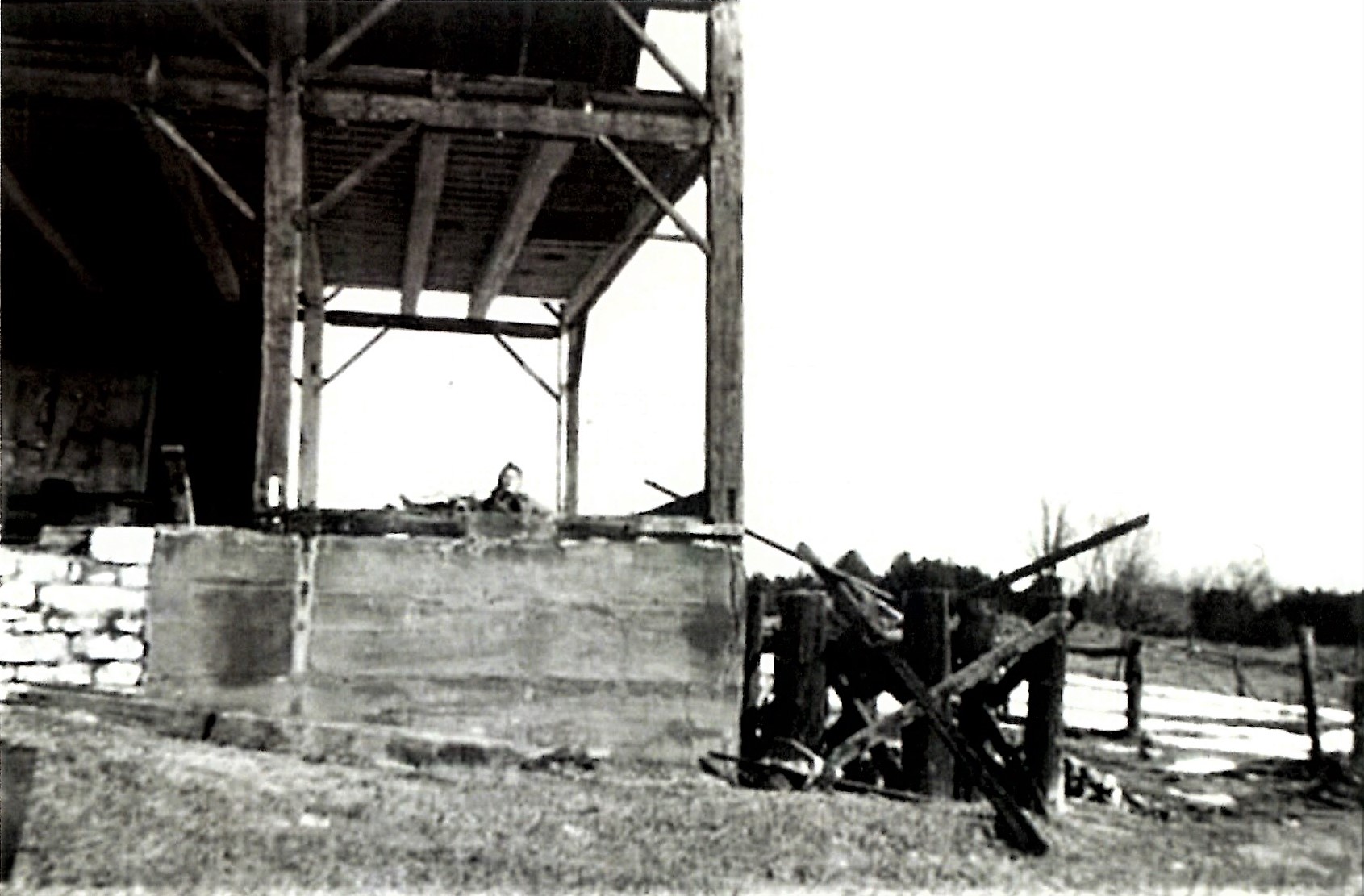
Cook cheese factory demolition c.1945

Cook cheese factory demolition c.1945

Cook cheese factory demolition c.1945 located at #144 Clemenger Rd

Cook cheese factory demolition c.1945 located at #144 Clemenger Rd

Cook Cheese Factory manager's house

Kennedy homestead #241 Clemenger Road This is just east of the Cook factory on the north side of the road.

Kennedy homestead #241 Clemenger Road This is just east of the Cook CHEESE factory on the north side of the road.

VANSICKLE  - Wm. Carmen, Sec,   Vansickle

RIVERSIDE CHEESE FACTORY

Riverside Cheese Factory on the west side of the Crowe River,  a few steps north of Highway 7.  Jno. Booth is listed as Secretary.  A small wooden plaque  stands in a lush patch of poison ivy and reads:

RIVERSIDE CHEESE FACTORY was built on this site during the 1890's. Although only a two man operation, production was in excess of 800 pounds per day. Only cheddar cheese was made. The cheese factory was torn down when it became economically unfeasible to continue operations.

The poster on the left would suggest the Riverside Cheese factory had its first closure in 1893 due to the death of the owner.  It is also interesting the John Cook,  owner of the Cook Cheese Factory was the executor for the deceased's estate.  The last line of the poster also indicates that the land on the riverbank was not owned by the factory but leased,  probably from the Pearce family.


A note in the Marmora Herald on April 29, 1909, reported:  "The Riverside Cheese Factory will commence operation for the season of 1909 on Monday, May 3rd,  under the management of Jessie Williams."    suggesting the factory was seasonal.

Riverside Cheese factory photo by Martha Hunt

The old sign finally disintegrated, but i n2026 it was replaced by the Marmora Historical Foundation.

 Although we have no dates,  there also existed in Marmora Township the North Star Cheese and the Champion Cheese and Butter Company,  both in Malone.  Down in Bonarlaw two cheese factories were running in 1898 - the Maple Leaf,  and the Big Springs Cheese Factories.

Terry Bell writes:  Those were the days - daily visits with local farmers bringing their milk to the Factory. My first job at 15 was working for cheesemaker Blake Johnson for $3 a day,7 days a week. Still remember the whole process as if it was yesterday.

David Carl Johnston writes on March 25, 2026 - Reading the comment by Terry Bell below and his mentioning my granduncle Blake Johnston, I can recall my father Carl Johnston and his father Fred Johnston taking us out to Blake's cheese factory and my memory is of Blake yelling to us kids at the time to come in here and fill your guts with curds. Yes, warm squeaky curds to the point of nearly exploding.

Dr. Parkin Jr. campaigned against drunk driving


Almost everyone in town has fond memories of Dr. Herbert Parkin,  who practiced medicine in Marmora for 38 years.  But probably a lot less people realize his son,  Herbert Parkin Jr. was also a physician.  He worked in the emergency department for 15 years in the Royal Columbian Hospital in BC.  It was there that he developed his strong views concerning drinking and driving and eventually spearheaded that province's government program named "Counter Attack".

Parkin appeared in commercials as the persuasive,  green-smocked surgeon saying that he's been trying to save a little girl,  victim of an impaired driver.  He goes on: "Now I've got to tell her parents there's nothing more I can do"  The punch line:  "But there is something you can do.  If you see a drinking driver,  please call the police."

Dr. Parkin died of cancer on Jan 4, 1987 at the age of 42


The Naming of Forsyth Street


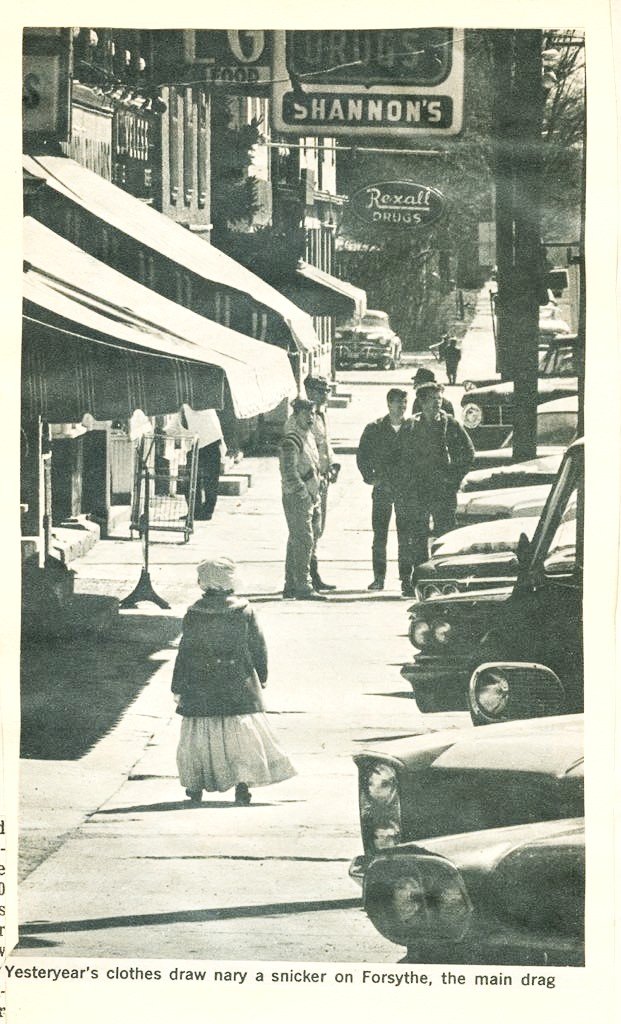
For many years, the residents of Marmora could boast that they had one of the most beautiful avenues in the County. Around the turn of the century, Forsyth Street was known as "Lovers' Lane". Both sides were lined with stately elm and maple. The houses were fronted by wide porches. Along the board sidewa1k ran numerous white picket fences. Forsyth Street was the principal street in town and its sidewalk continued uninterrupted right across the road which is now Highway Seven

Forsyth Street was named for James Bell Forsyth,   born in 1802 at Kingston. His uncles were partners in the famous commercial firm of Forsyth, Richardson and Company. The firm traded on both sides of the Atlantic, and in both Upper and Lower Canada. The heart of the business was in the old quarter of Quebec City.

In 1828, Forsyth married the second daughter of Matthew Bell, the businessman who operated the historic Saint-Maurice Ironworks at Trois Rivieres. That started an interest with iron manufacturing that 1ead to him owning a great share of the Marmora Ironworks, and with it,  a 1arge part of the Vi11age. 

Forsyth became a principal of the Marmora Foundry Company. Incorporated in 1831,   the Marmora Foundry Company was inspired by a prospective market for military and naval supplies and the government's plan to make the market for iron ore wares more accessible. His associates, Edward Bursthall, Peter McGill and W.A. Matthews (Mayor of Sheffield & Master cutler)   also gave their names to Village streets.

W.A. Matthews

Forsyth's enterprises ranged from furs to tea importation, from sailing vessels to steamships, but his greatest love was the development of railways. Among numerous rail lines he helped establish and direct were the Quebec and St. Andrews Railway (1850), the Quebec and Richmond Railway (1850) and the Grand Trunk Railway (1852). Despite his best efforts, he,  Like his predecessors, was unable to build the rail link to Marmora which would surely have made it prosper.

    Peter McGill

    Peter McGill

Forsyth is described as having been a "stern and self-possessed" man, portly and balding. He bought himself the best. Boats and furniture from London and hogsheads of Madeira wine. He travelled widely and wrote a journal called rather whimsically, "A few months in the East, or a glimpse of the Red, the Dead, and the Black Seas". For all his talents, he,  like all his predecessors, seems to have lost a substantial sum trying to operate the Marmora Ironworks.

John Bursthall, nephew       of Edward Bursthall

His daughter,  Fanny Bell Forsyth,  married John Bursthall,  pictured on the right.', nephew of Edward Bursthall.

(Click here for the Brian J. Young, “FORSYTH, JAMES BELL,” in Dictionary of Canadian Biography, vol. 9, University of Toronto )

The tragic ending of Mr Ewart Warren

On Nov, 24,  1927,    Mr.  Ewart Warren was let out on bail by Magistrate' Casement after giving evidence against his partners in the robbery of Mrs. Hubble's grave. 

(If you missed that story,  Click here. You'll find that story at the bottom of the page)

Little did he know that five years later the Judge would not be so lenient.


Ottawa Citizen Oct. 17, 1932

Ewart Warren’s body was claimed by his father, Robert Warren.
1 of 8 brothers and sisters.
Most of his family moved out of the Toronto area. His father and mother moved to Port Hope, and 3 of his siblings moved to Michigan, USA.
Son of Robert Wallace Warren and Mary Frances Southworth.
Husband of Mary Mildred Brown, whom he married in 1925.
Occupation: Blacksmith, in Marmora, Ontario.

The Marmora - Ottawa Connection

There is no doubt that the big old house at 53 Forsyth Street in Marmora was one of the grandest for miles.   Some time in 1900,  the Marmora Herald wrote:

" It is a large, handsome, red brick house situated on the west side of Forsythe St.  adjoining Mr. Carscallen's former residence on the north.  The design is a very pretty one and in the general effect - size,  symmetry of parts,  material,  workmanshipand in fact,  every detail - the building is perfect.  It was completed in March of last year.

  But did you know that the architect hired by the owner, ( A.W. Carscallen, M.P.)  was the highly respected Moses Chamberlain Edey - the architect who designed the Aberdeen Pavilion in Ottawa,  as well as the Daly Building - Ottawa's first department store.
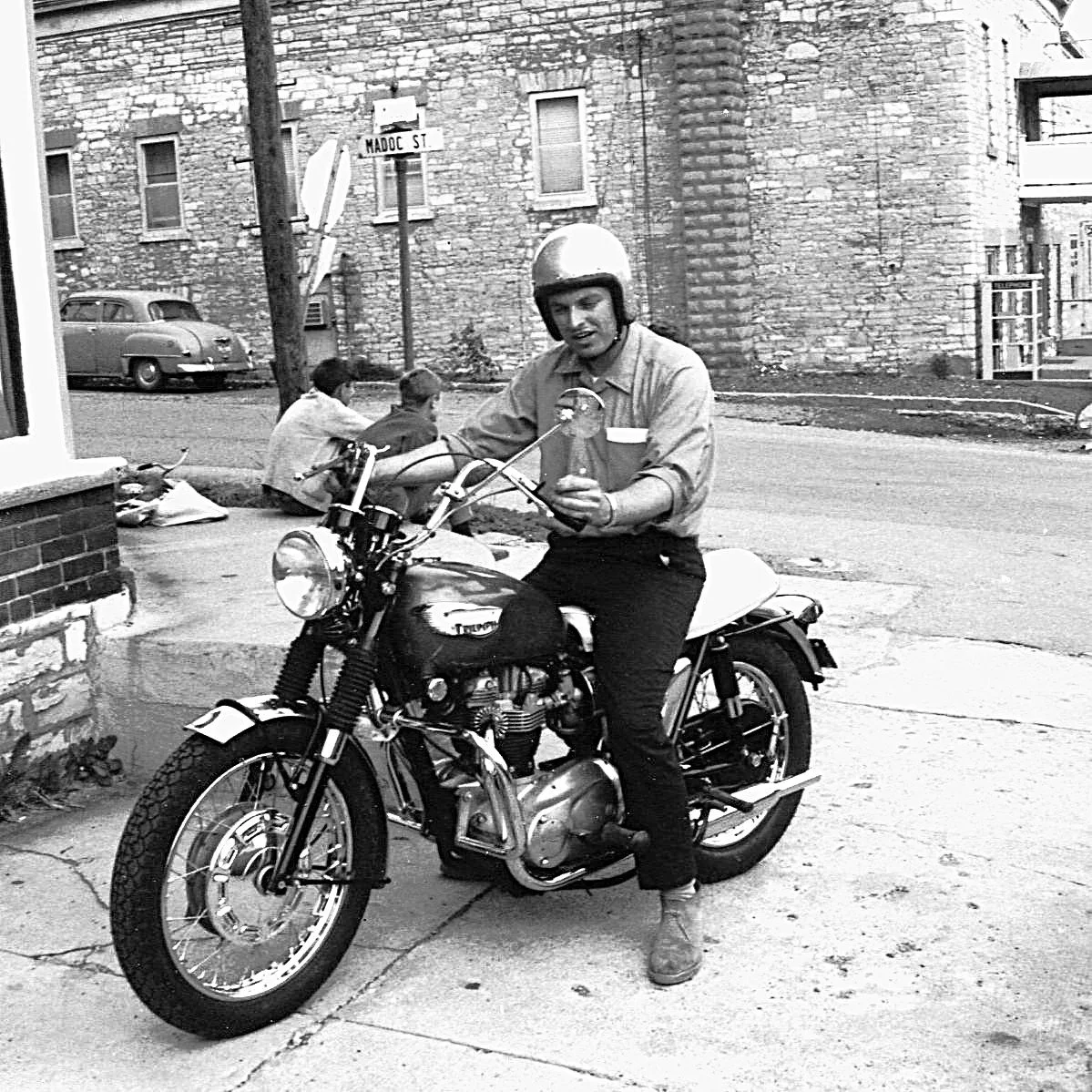
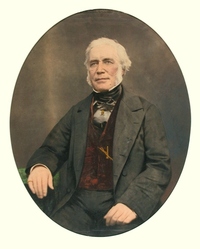
Moses Chamberlain Edey,  Architect in 1869

Ottawa's Aberdeen Pavilion

Ottawa's first department store,  the Daly Building demolished in 1992

Ottawa's first department store,  the Daly Building demolished in 1992

Col Charles Lindbergh circles Marmora

July 7, 1927,  the Marmora Herald wrote that Col Charles Lindbergh passed over Marmora in his monoplane,  "The Spirit of St. Louis".  He was accompanied by a squadron of eleven United States Army planes.  His plane appeared much faster than the others,  and he was able to circle round or outdistance them at will.  Unfortunately one of his escorts was killed as a result of a collision with another machine while preparing to land in Ottawa.

Marmora Cooperage Co. - A Trenton Connection

The Marmora Cooperage Company was located on the lands north of 75 Main Street,  where the manager's house stood.  This company was a subsidiary of the Trenton Cooperage Mills,  one of the many business interests of Senator William Alexander Fraser.

Senator William Alexander Fraser (pictured at left) was born in Trenton, Ontario where he served as Mayor in the 1920s. He represented the riding of Northumberland in Parliament with the Liberal party from 1930 through 1945. He served as Chief Whip in the Mackenzie King government. He was later appointed to the Senate, where he remained until his death in 1962.
Fraser pursued a variety of business interests beyond the Trenton Cooperage Mills, including a major cold storage business, fruit-growing and processing, regional newspapers, movie theatres, and a bridge-building company that later helped manufacture corvettes for the Royal Canadian Navy during World War II.   One of his major feats was acquiring the RCAF Air Base for Trenton a few years before the outbreak of World War II. He was known as "Nickel Billy", perhaps in reference to his business skills. He died at a Kingston, Ontario hospital, at the age of 76.

A monument stands on the shores of Trenton in memory of Senator Fraser and his partner,  Evan James

CLICK HERE TO READ ABOUT THE MARMORA COOPERAGE COMPANY.


1854 - The Madoc Meteorite

One of the largest and heaviest meteorites ever found in Canada was discovered in 1854 near Madoc. The exact location of its find is unknown, as is its finder, but it is known to have landed in the southwest corner of Madoc Township, just west of the town. When discovered, the Madoc Meteorite weighed 167.8 kilograms. As the result of fragments being sliced off for research purposes, the meteorite today weighs 156 kilograms. The only larger meteorites found in Canada were at Bruderheim, Alberta, (303 kilograms) and Iron Creek, Alberta. (175 kilograms).  The Madoc Meteorite was acquired by the Geological Survey of Canada in 1855 and immediately went on tour to an exposition in Paris, France. It was the first meteorite acquired for the national meteorite collection.

The Geological Survey of Canada office in Ottawa is the main home of the Madoc Meteorite. However, it periodically goes travelling and has been on display at the Planétarium de Montréal, the Montreal Museum of Fine Arts and the Canadian Museum of Nature.The iron meteorite is thought to have spent a long time on the ground before discovery because it is covered with a film of oxidation and the first few centimetres below its surface have been altered by the earth’s atmosphere. The largest meteorite ever found weighs about 60 metric tonnes and fell at Hoba West, a farm near  Grootfontein, Namibia.


Mr. Jones - What a fine fellow!

Did You Know?


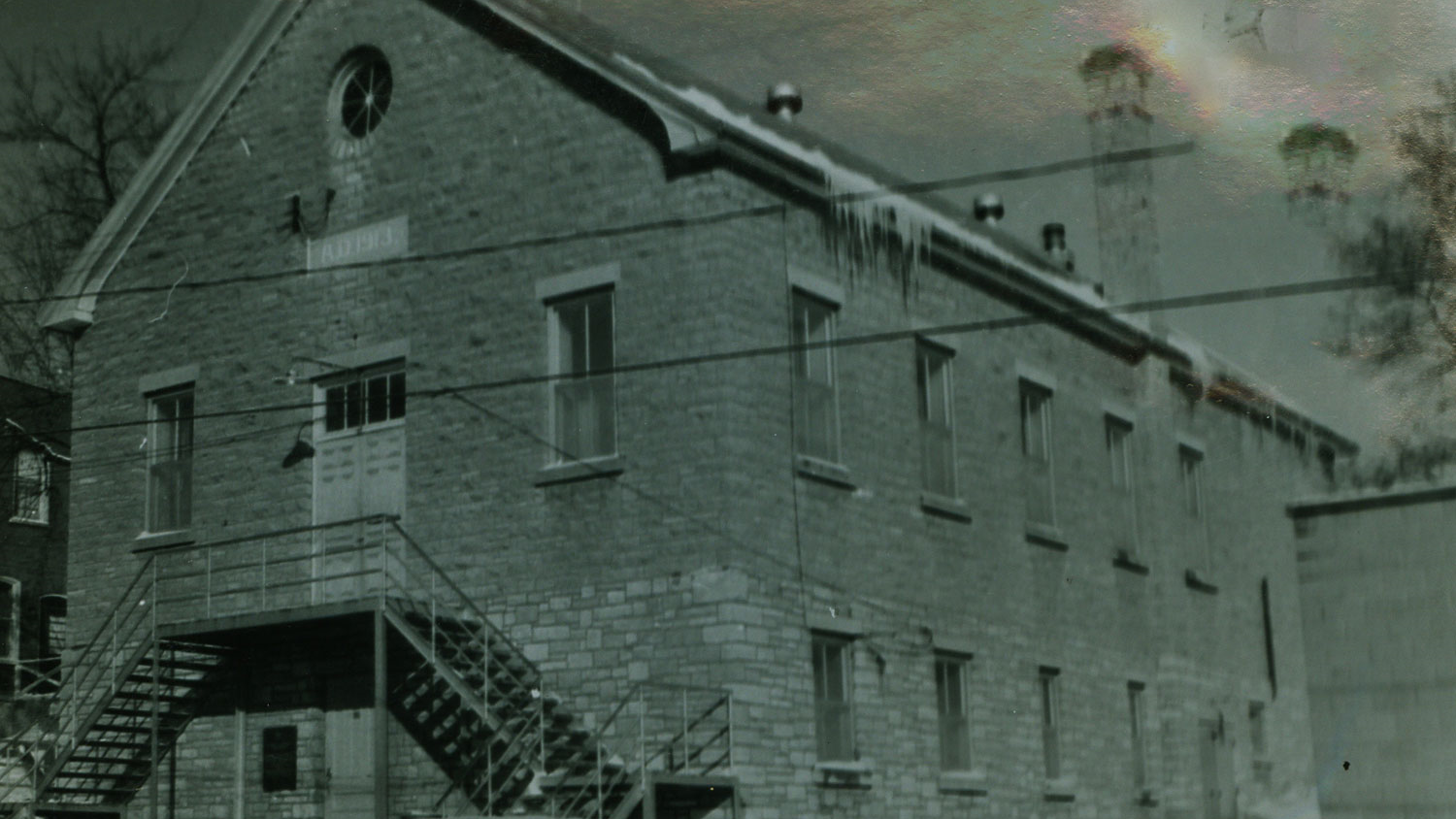
The area around the intersection of Centre Line Road and Beaver Creek Road,  sometimes referred to as North Marmora,  Bailey's Corners and even Shanick at one time,  originated as the Jones Settlement.  Here you will find SS2 School House,  known as the Jones School,  still standing,  but in rough shape.  To the north of the school used to be a store and post office,  and on the north east corner of the intersection,  the cheese factory still stands.

Charlie Jones was born and raised on the Jones Settlement.  He was a former councilman of Marmora Township.  He founded and developed the Beaver Creek Telephone Company,  and it was used by many of the people in the surrounding settlements - the Johns,  the Campions and the Loughs.

In the early 1920s,  the  Jones family was the first in the area to own a radio and they were able to receive the Grande Ole Opry on this radio on Saturday evenings..  As his neighbours could not afford a radio,  Mr Jones would air the show over the telephone party lines for all of them to enjoy.  What a fine fellow!
 

The Marmora Cheese Factory,  now a private home

TERRY FOX IN MARMORA 35 YEAR AGO

The first Terry Fox Marathon of Hope Run was held in 1981,  shortly after his death on June 28th of that year.  Less than a month later,  British Columbia named a 2,639-metre (8,658 foot) peak in the Rocky Mountains, Mount Terry Fox, as a lasting symbol of Terry's courage.  He was already the youngest recipient of the Order of Canada and   he had been  named Canadian of the year.  Since his death,  numerous highways and roads have been named after him,  scholarships given in his name,  monuments erected,  a coin and a stamp issued,  books published,  a movie made and even a research institute has been named after him.   He had become  a Canadian hero.

By May of 2014,  the Terry Fox Foundation announced  that over $650 million had been raised to support cancer research in Terry's name.

Terry had been to Marmora the year before his death,  hosted by Dwayne & Betty Welch and Gordon & Stella Bennett,  and greeted by over 500 people at the I.G.A. parking lot.  A total of $2300.00 was raised in four days.

Since that time,  Marmora has hosted a Terry Fox run every year,  and this year gearing up for the 35th anniversary,  organized by Lloyd McCoy,  to be held Sept. 20th.     To read more about Terry Fox in Marmora,  and the dedicated participants in the Terry Fox Run over the years,  CLICK HERE.

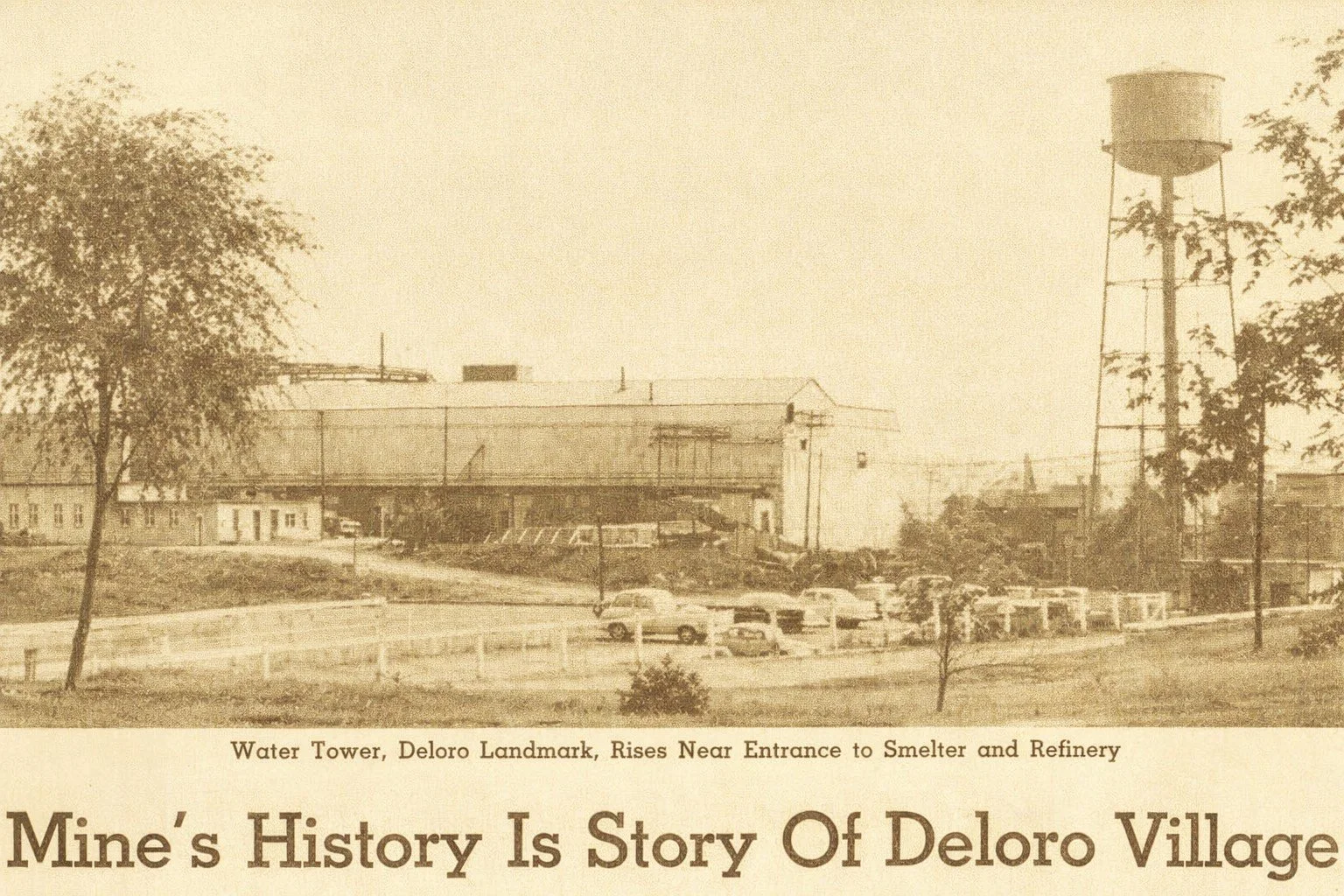
1952 DELORO STRIKES

In 1952 there was a strike held at the Deloro Refining and Smelting Company, led by the Miner, Mill and Smelter Workers Union.
The Herald reported on the agreement reached, but was not impressed. One paragraph even sounds like union busting:

"Most of the employees realize now how badly they were mislead by the Union, both in promises of strike pay and benefits while a strike was in operation, and also in claims of what could be accomplished by a strike. It will take years to make up what they have lost as a result of the strike. Employees who are dissatisfied with the conduct and results of the strike have the privilege of notifying the company, within seven days of the Signing of the agreement, that they wish to have deductions from their pay cheque for union dues discontinued. That would be one way of making a small saving each month and help get rid of Mine, Mill and Smelter Workers Union. Another thing that is making Union members angry is the discovery of the amount of the Local 889 funds that have been used for the benefit of some of the local executive before and during the strike.
 

CLICK HERE to read the whole Herald write-up at the bottom of this page:


Grave Matters - News of the Dead

Ignac Paradis was one of four  young log drivers drowned in our river system between 1867 & 1869.  All are buried at the "Hughes Cemetery"  on the Centre Line Road.

Ignac was  born  in 1849 and died May 10, 1869. He  was from St. Lambert, Quebec and worked for  the Page Lumber Company.  He drowned at Deer River Falls, (Cordova dam) Belmont Township and his monument was erected by Mr. R. Downs or Mr. R. Page of the Page Lumber Co. but nothing remains of the original monument.  In August, 2014,  however,  a new white  cross and plaque were erected in memory of this lost soul.

You can read all about this cemetery,  and in fact,  all our other cemeteries,  complete with lists & photos of tombstones,   in our new section  GRAVE MATTERS .

The Marmora Dam

The original  Marmora dam was located about 200 feet upstream of the present dam and at a more northerly angle.   It  was a timber crib structure. In 1930, the crib works were replaced with concrete spillways at the west end of the dam structure. This spillway had five openings, each of which were 14 feet wide. The west spillway was separated from the centre sluice way by a gravity wall (which was over-topped during the "one in 100 years" flood in the spring of 1976.) The centre sluice way, before construction, had one opening which was 10 feet wide.Even with all the stop logs in place, a considerable amount of water was passing through, under and around the sluice way through major clefts in the bedrock. The east section contained one sluice way which is about 20 feet wide.
Read the whole story of the Marmora Dam Click here.

The Naming of Hayes Street

ITEMS OF IRON FOUND ON THE SITE OF THE HAYES BLAST FURNACE

 In telling the story of the Streets of Marmora,  we would be remiss in not mentioning  the street named after the Village's founder,  Charles Hayes.  In the 1790's, the Loyalists first came to the Bay of Quinte. Over the next 30 years, the southern townships filled with settlers, but in 1820 there were still less than 50 pioneers in the whole of Marmora and Lake Townships. In that year, Charles Hayes, originally of Dublin, Ireland, conceived the idea to start an ironworks at what was then known as "High Falls" on the Crowe River.

The water power to run six enormous waterwheels came from the river. Two enormous blast furnaces, reduced iron ore, charcoal and limestone into molten iron which was cast largely for ballast for the British Navy. Barges, loaded with ore, were rowed from Blairton and unloaded, after their two-day trip, near the present boat ramp in the North End Park. The village grew as the industry did, and within a few years,  200 workers had emigrated to find work in Marmora.

By 1825,  it became clear that Hayes' enterprise was failing. All the produce of the mine had to be dragged out over the road  to Kingston, but that road was impassable for much of the winter.  In the spring, it broke up into mud holes, and in the summer it hardened into wheel-breaking ruts. It was just not practical to transport large and heavy iron bars all the way from Hayes' village in the bush. The Works were lost to Hayes' creditors. Hayes went back to England in 1825. He subsequently recovered his losses working  in the linen trade and so far as is known, never returned.


The naming of Cameron Street, Marmora

The Honourable Malcolm Cameron. Malcolm Cameron is normally associated with the history of Sarnia. Indeed, one biographer says that no citizen "filled so large a place in the public eye while living, as The Honourable Malcolm Cameron, and no one who has passed away is more affectionately and proudly remembered". Cameron was born at another iron town, Trois Rivieres, Quebec, on April 25, 1808. His parents were both natives of Scotland. Cameron soon displayed both a capacity for business and "a taste for public affairs." At the age of 28, he became a member of the Upper Canada Assembly, and he subsequently represented the ridings  of Kent, Huron, Lambton & St. Clair,   almost successively until he became Queen's Printer in 1863.

For the last thirty years of that period, he also served as a member of the Parliament ofCanada. In the government of Sir Charles Bagot, he became "Inspector of Revenue" and, in an accomplishment which shows the value of the dollar at that time, it is boasted that he increased provincial revenues by $50,000.   As a businessman, Cameron,  like most enterprising men of his day, was deeply engaged in the development of railways. Railways required iron and that fact,  and his place of birth, may have attracted him to Upper Canada's Irontown.   At Marmora, Cameron purchased, developed and resold lots behind those fronting on Forsyth Street,  the lots south of Linn Street and across the river 'to the south of Norwood Road. Those areas became known as the "Cameron Section", and, of course; our present "Cameron Street" was named for him.

(As many as 24 trains a day ran up this street in Marmora from 1884 to the 1970's for the Marmora Railway and Mining Company, a branch of the Central Ontario Railway (COR), later owned by the Canadian Northern Railway (CNR) and finally Canadian National (CN).)

Click here for more on the Central Ontario Railway

As what he called an "advanced liberal",   Malcolm Cameron campaigned throughout his life for causes and rights which we take for granted.   He sought the abolition of debtor's prisons, the vote by secret ballot, and the release for settlement of the enormous clergy reserves. It is said that, but for his modesty and benevolence, he could easily have obtained the highest offices in the lands but that he preferred the advancement of others over his own. When he died on June 1, 1876,  he was again a sitting member of Parliament.

Famous Marmora Doctor

Dr. Allan Roy Dafoe was Marmora's resident doctor in 1908, assisting Dr. MacKechnie in the house on Forsyth Street later owned by Dr Parkin. His fame skyrocketed on May 28, 1934 when he delivered the famous Dionne Quintuplets in Callander, Ontario. With skill and zeal he ministered to the five babies whose combined weight was 13 1/2 pounds. Dr. Dafoe had the honour of presenting his little patients to King George VI and Queen Elizabeth during their visit in 1939. He was given the Order of the British Empire. Dr. A. R. Dafoe died at North Bay on June 2, 1943, aged 60.

Read all about  Marmora doctors at    http://www.marmorahistory.ca/doctors

Nayler's Common hosted cephalopods

On the main path in Nayler's Common, you can find a cephalopod fossil!   What is a cephalopod?
Cephalopods first appeared about 500 million years ago in the Upper Cambrian Period. Two groups of cephalopods exist today: The Nautiloidea with a few species of the pearly nautilus, and the Coleoidea, containing the squids, cuttlefishes, octopods and vampire squids

Read more about Nayler's Common and the going's-on there 500 million years later.

In Sept. of 1984, Percy Gray, living next door to Nayler’s Common discovered a limestone rock, which contained an invertebrate fossil. This “cephalopod'“ dates back to to the Paleozoic era, which spanned from 541 to 252 million years ago. It was a time of immense biological and geological change when much of Ontario was covered by an ocean. This marine creature was prolific on these marine environments, eventually buried in sand and fossilized. They are quite common in the limestone of our area.