DID YOU KNOW?

(If you reach the bottom of the page,  hit "Next".  There's more!)


The St. James Hotel

A reference to the St. James Hotel now 156 years old... (NW Corner of Highways 7 & 14)

"The travelling public are respectfully informed that a new stone hotel has been recently opened at The Marmora Iron Works,  very conveniently situated at the terminus of the new macadamized road from Belleville,  and close to the Iron Furnaces which are now in active operation.
To the sportsman this offers a new field,  the number of wild fowl on Crowe Lake and Belmont Lakes,  the excellent fishing,  and the herds of deer,  a quantity of which have been lately sent to the New York Market,  offer unusual attraction not often found together."

Toronto Globe, September 24, 1858

Read all the history on the St. James Hotel.  Click here.


The "Pioneer" - Famous locomotive in Blairton

Did you know....

THE "PIONEER" - Famous locomotive in Blairton
When all else fails, try again. When the Marmora Iron Company saw the gloomy profit reports in 1866, they decided to amalgamate with the Cobourg-Peterborough Railway Co., and with American investors, formed the Cobourg, Peterborough and Marmora Railway and Mining Co. This company planned to move the Blairton iron ore to a smelting furnace in Rochester by rail to the Narrows on the Trent River, by boat to Harwood Station on Rice Lake, by rail to Cobourg and again by boat to Rochester. The locomotive on the Cobourg track, known as the "Pioneer", was shipped by water to Cobourg from Nova Scotia . A now forgotten story, this model of locomotive was the first engine to operate in Canada

Read more about Blairton and the American connection


1823 If, at first, you don't succeed, perhaps you should give up.

Did you know....
The business venture of Charles Hayes, the Marmora Iron Works of 1823, was plagued with troubles making it impossible to finance. The road to Belleville was impassable; his workers were prone to rowdiness and disorderly conduct; the native locals were unhappy with their treatment by the British Government, and his dream of a connection to the Trent was denied. By 1824 he gave it all up to his creditors, Peter McGill, Anthony Manahan and Robert Hayes, and by 1830, they sold to Thomas Hetherington, who had some new ideas but suffered all the same difficulties.


In 1847, Joseph Van Norman, an experienced smelter from Norfolk County, bought the Works and built a new road to Healey Falls. From the River Trent a steamer carried the pig iron to Rice Lake from where it was carted 12 miles to the Dock in Cobourg. His new route looked good and business started to boom, only to be lost again with the opening of the St. Lawrence Canal, allowing cheaper British iron to be shipped inland. Van Norman lost everything. The "Marmora Foundry Company" lay dormant until 1856 when Mr. Vernon Smith, and later Mr. Bentley gave it one more try.

Read more on the Marmora Ironworks of 1823

29 unmarked burial sites

Just south of the north-end boat launch in Marmora, spanned the first bridge across the Crowe River. Leading west across the river, the road turned south passed what is now the Crowe Valley Conservation Authority building and round the rock knoll (now cut through for the #7 Highway) on its way to Havelock & Norwood. With this road being the main route west, it made sense to build the first church, St. Matilda's here, right on the road and with a beautiful view upstream. And so it was, in 1825, that Laughlin Hughes helped choose the site. Little did he know that his son, John Hughes, who drowned in the river, would be the first person to be buried there. It is said there are 29 unmarked burial sites in this cemetery.

Bonarlaw a busy place.


Bonarlaw's first name was Central Ontario Junction. The railway was first acquired by the Canadian Northern Railway, and subsequently merged into the Canadian National system, when, in 1917,  the name changed to Bonarlaw, named for British Prime Minister Andrew Bonar Law. (Born in New Brunswick, he is the only British Prime Minister to have been born outside the British Isles.)  The community has also been known as Big Springs and Bellview. The station was a junction point for the C.P.R. and the previously mentioned railways. Before automobiles, the station was very busy with a daily train to and from Toronto, as well as an afternoon and night train over the C.P.R. tracks.

You can read a lot more about Bonarlaw.

CLICK HERE

On March 26, 2021, Molly wrote:

I currently live in the old Station Master’s home in Bonarlaw and I love finding information like this about how Bonarlaw used to be. You would never know nowadays passing through.

Brenda Mason Sept. 28, 2024 My mother grew up on the 14th Rawdon and tells of her grandmother’s insulin coming by train and being dropped off at Bonarlaw Station. She called herself “one of Dr. Banting’s Guinea pigs.” My mom would also walk back from school at lunch hour and return in order to administer her Grand-mother’s needle.

Captain John J. O'Neill 1893

DID YOU KNOW

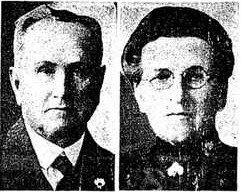
The building on the corner of Highways 7 and 14 (where the TD bank is situated) was built by Captain John Joseph O'Neil in 1893. He and his wife, Ellen Butler, emigrated from Ireland and settled in Deloro, living there until 1884 when they moved to Marmora. Capt. O'Neill was one of the first mining developers of Deloro and Cordova Gold Mines.
The" O'Neill building" replaced a small frame building belonging to Dr. L.E. Pomeroy, who ran a medical practice there with his red brick home behind it, facing Matthew Street (Highway 7). He moved his practice to "Stewart Drugstore" on Forsyth St. The new O'Neill building housed a hardware in the south half and the north half (where the Historical Foundation is today) was leased to the Sovereign Bank of Canada.

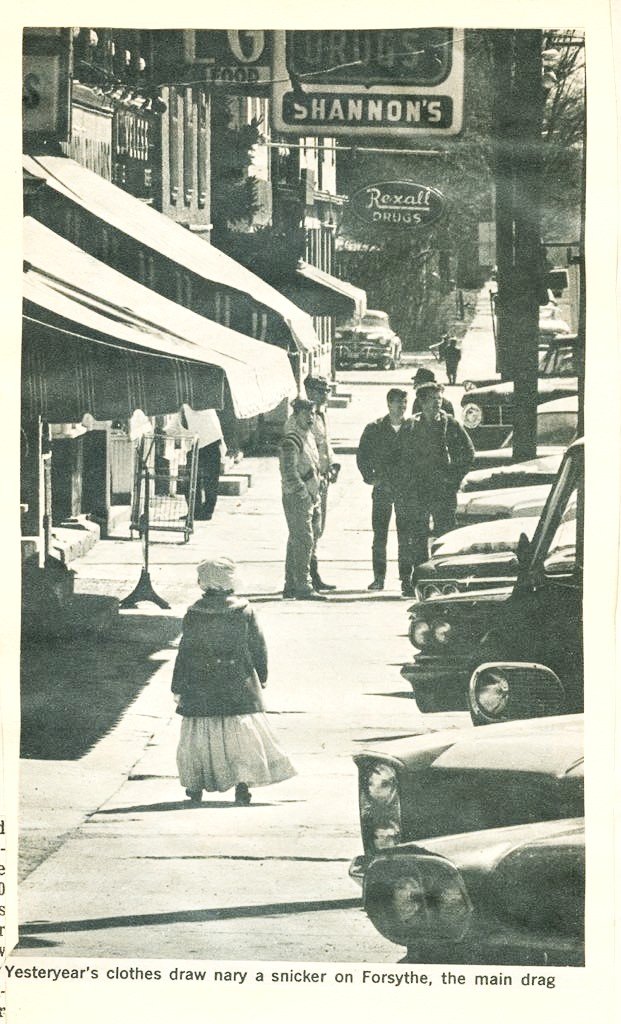
Read more about the buildings on Forsyth Street - Click here

1892 Gold at the dam

On the island east of the generating plant at the dam in Marmora,  the Hastings Mining and Reduction Co. established a gold processing plant in 1892,  having acquired the site and water power rights from the Pearce Co. The remains of the foundations can still be seen today.

Where did all the iron go?

Ever wondered what they did with all that iron ore from Blairton that made its way to the blast furnace in 1823? While we know a lot of iron was used as ballast for ship returning to England,  in November of that year, Charles Hayes advertised an increased variety of goods including "Potash kettles and cooler, 40 gallon cauldrons and sugar kettles, single and double stores, pots and Bake ovens, Dog Irons, Sleigh shoes, cart and wagon boxes, Fanning Mill, Irons and Mill and Bar Iron."               So what are Dog Irons?  They're the metal supports for logs in a fireplace.


Licence? Beans, Baloney and Balderdash, I say!

As a young man,   Mr. Thomas  Ephraim Potts (1872-1952)  worked at Deloro Smelting and Refining Co. Ltd,  and ran the boarding house in Deloro  for three years.  He later  operated the old St. James Hotel for nine years, the Royal Hotel in Marmora for another nine years,  the Tipperary House on Crowe Lake for five years , and Huyck's Hotel in Tweed (Tweedsmuir)for six years.

During all the time he was in the hotel business,  Mr. Potts carried on without a liquor license and proved it was possible to make a success of it without one.

Oh the IRONy

Tecumseh Drive

'Tecumseh allied his forces with the British. Painting by W.B. Turner (courtesy Metropolitan. )

We are all aware of the close ties between Pittsburgh -Bethlehem area and Marmora. Over a century ago, samples of Blairton iron ore were sent south. They were so well thought of that from 1867-1873 more than 300,000 tons were blasted off the rock face there, loaded onto a new rail line, specially built, and sent off for smelting in Pennsylvania.  Much later, the Marmoraton Mines provided ore from the east of town and employed hundreds of villagers.  What we still call the Townsite, on the plateau north of Highway 7 and west of the river, was established for the new homes to be built for the Americans sent to manage the. works. Within the Townsite, the streets were named after tribes or noted Indians. It was ironic that one street was named after the Indian leader Tecumseh. There was no one who fought more viciously or more successfully against the Americans in the war of 1814.

St. Matilda's Cross

This very historical cross was manufactured out of pig iron from the Marmora Ironworks (and may be the only remaining item from the blast furnace).  It was first mounted on the roof peak of the first church built in Marmora in 1825. The old limestone church was located on the west shores of Crowe River near the dam. When the little stone was abandoned in 1874, the cross disappeared for a number of years.It surfaced again and was mounted on the new Separate School roof steeple built by Stanislaus Bertrand in 191.5. For a few more years it disappeared only to surface this time mounted on the white wooden cross at the east end of the Sacred Heart Cemetery grounds.
It was removed from the cross in 1998 and is now permanently mounted in the church of the Sacred Heart of Jesus, Marmora, Ontario. 

(From the History of Sacred Heart Church by Gerald Belanger)


Bleeckers - 90 Years of Municipal Book Keeping

George William Bleecker 1824-1895

Charles bleecker signature on tax receipt

Between George Bleecker (1824-1881) and his son, Charles Archibald Bleecker (1857-1945), they held the office of Municipal treasurer for 90 years, starting in the Township, and then in the Village upon the incorporation of the Village in Sept. 1901.

Wolf Station 1884

Marmora's Wolf Station, now located on Cameron Street, south of No. 7 highway, was built in 1884 on the Central Ontario Railway line, two miles east of town, and remained there for 100 years. The station was named for a man murdered there. After the line was abandoned, the station was rescued by the Marmora Historical Foundation and reset on the north side of Highway 7, to be later, moved again by the town to the south side. On this location, it sits on an old spur line that ran north to the lumber mills at the Marmora Dam and on to the Cordova Gold Mines. In 1923, this spur line had as its president, Sir Henry Worth Thornton, the first president of the C.N.R..


St. James Hotel, Marmora

In reference to the St. James Hotel (now the Autoparts store at Highways 7 & 14), an advertisement  in the Toronto Globe, Sept. 24, 1858, read a s follows:
"The travelling public are respectfully informed that a new Stone Hotel has been recently opened at The Marmora Iron Works, very conveniently situated at the terminus of the new macadamized road from Belleville, and close to the Iron Furnaces which are now in active operation."     (Note the third floor)

When Peterborough was just a mill....

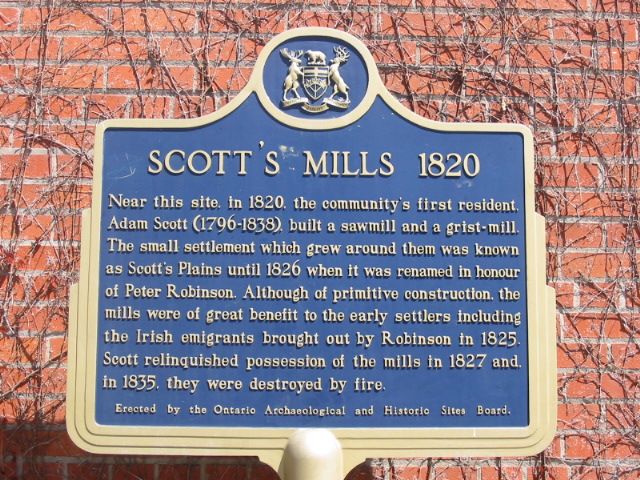
In 1824, there was a population of 400 people living in Marmora in connection with the blast furnace located by the dam behind Main Street. At that time, Peterborough was a mere grist and saw mill run by Adam Scott. The area then was known as "Scott's Plain". It wasn't until 1825 that Peter Robinson brought over 1878 Irish immigrants to settle them on Scott's Plain, and changed the name to "Peterborough".
 

The naming of Lake Township


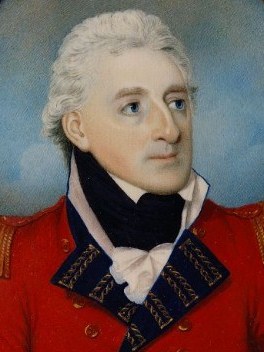
Did you ever wonder how Lake Township got its name? It wasn't for all the lakes therein. It was named in honour of this gentleman -
General Gerard Lake, 1st Viscount Lake (27 July 1744 – 20 February 1808) was a British general. He commanded British forces during the Irish Rebellion of 1798 and later served as Commander-in-Chief of the military in British India.

Fatal accident with Blairton ore cars "resurfaces"

Ore Car raised from the Trent River by Parks Canada with the help of diver Brian McCrodan who hitched the chains underwater.   (Photo by dick kane)

By the early 1880's, efforts were being made to wrap up operations at the Blairton iron mine, which included shipping out the final loads of stock-piled ore to Cobourg. It was during that period - in 1881 - that a fatal accident occurred at the loading pier at Trent River Narrows. As ore cars were being 'brought into position for unloading into the two barges sitting below the cribs, the train overshot the mark, and five ore cars went off the end of the pier into the river. One man was swept into the water and died. The story about the accident was reported in the newspapers at the time, but no attempt was made to retrieve the cars from the river: the mine was closing and the cars would not have been worth the effort required to hoist them out of the water. They remained submerged.

It wasn't until 1980 - when the story came to the attention of a retired mining engineer Arthur Dunn - that the ore car story finally "resurfaced". Dunn was conducting research into the Marmora Iron Works, and was intrigued by the story from 99 years earlier. He managed to persuade Parks Canada to use their resources to retrieve the remains of the ore cars from the river- the Trent River being a federally regulated waterway.

Shanick death was not a murder....

According to Shanick folklore,  and Ruth's Tierney's book "Echoes From the Past",    George Franklin found his brother Charles Franklin with his face in Beaver Creek and with an axe buried deep into the back of his skull.   Darren Neill,  a family member,  advises he has  Charles' death certificate, the coroners report , and the Marmora newspaper article documenting his death. He did drown in Beaver creek near Shanick but he was not murdered.

Darren goes on to dispel another Shanick rumour pointing out that George Franklin, the last Post Master, was NOT  illiterate  as the story goes. (Ruth Tierney writes "To overcome this handicap and avoid confusion,  he laid the mail in neat order on a long table from which the recipients chose their own letters.")  George was Darren's great Grandmother's brother and they  have documents in his hand writing.  So maybe there was a long table,  and maybe the letters were laid out on it,  but this was not due to illiteracy.

Wedding day of Isabella Franklin and Robert Gray, November 22, 1904

Unknown, Mary Ann (Turner) Franklin, Isabella Franklin, Myrtle Franklin, Robert Gray

Darren adds, "George Franklin, Charles Franklin, Isabella Franklin ( Grey) and their mother Mary Anne Franklin, moved to Shanick from Elzivir area. Charles died in 1905 of accidental drowning in Beaver creek.  Their father was Richard Franklin who is buried in (Queensborough?).  My Grandmother, Myrtle Neill (Grey) and her brother German grew up in Shanick. Both far up the north road and the cabin on the concession rd that runs east. Myrtle and John Neill purchased the house we still own across from Trenear’s in the 1920s.

Click here to read more about Shanick